


Why Regular Engine Oil Maintenance Keeps Your Vehicle Running Strong
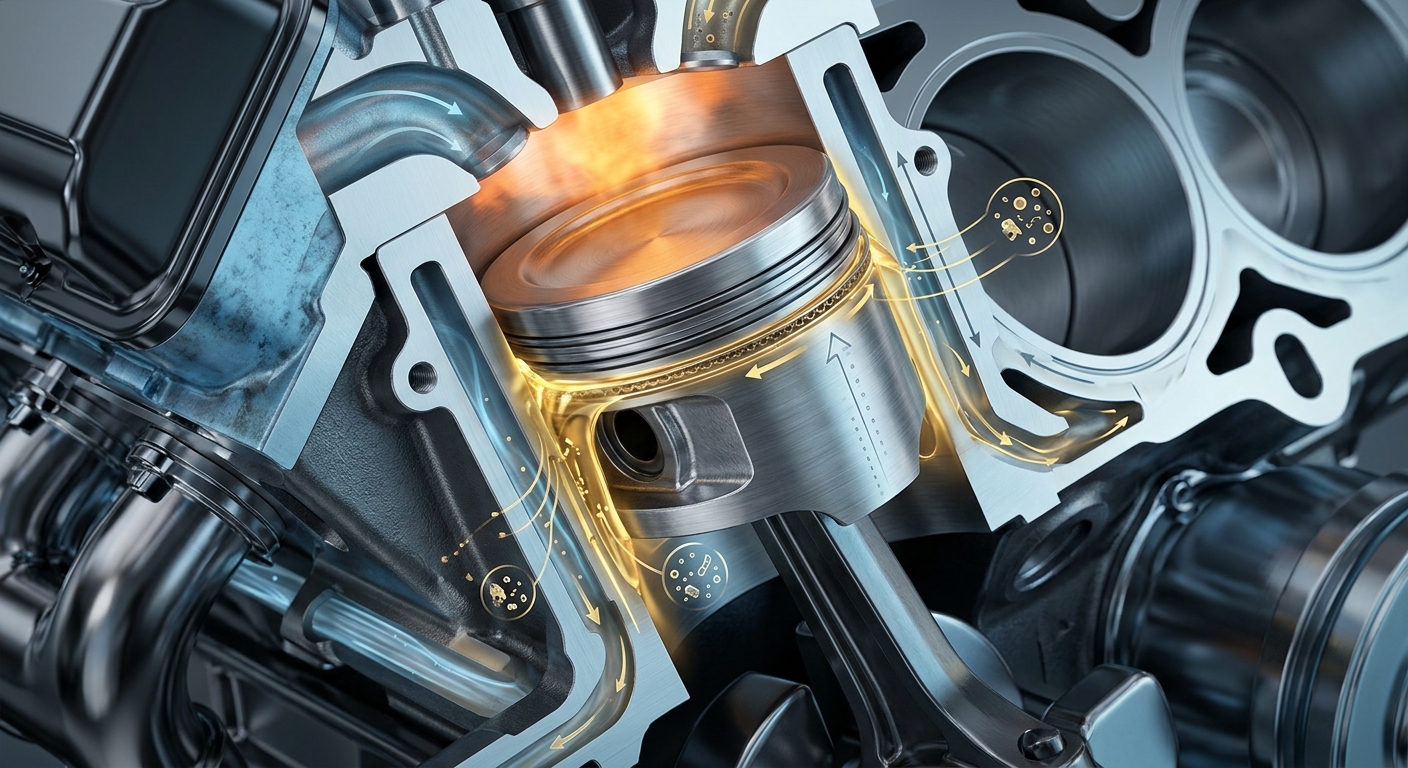
Engine oil is the most critical fluid in your vehicle, serving as the primary shield against friction, heat, and internal wear. The metal components inside an internal combustion engine move at thousands of revolutions per minute, creating extreme friction that would quickly destroy the engine without a protective barrier. Clean motor oil forms a microscopic film between these moving parts, allowing pistons, crankshafts, and camshafts to glide smoothly against one another.
Beyond simple lubrication, engine oil performs several other essential tasks to keep your vehicle operating efficiently:
- Cooling: While the radiator and coolant manage the upper half of the engine, circulating oil absorbs heat from the combustion chamber and lower engine block, releasing it as it flows through the oil pan or an external oil cooler.
- Cleaning: Modern motor oil is formulated with detergents that actively trap carbon soot, dirt, and combustion byproducts, suspending them in the fluid so they do not form harmful deposits on critical engine internals.
- Sealing: The oil film helps seal the tiny gap between the piston rings and cylinder walls, preventing high-pressure combustion gases from leaking into the crankcase and preserving engine compression.
Boating enthusiasts hauling heavy watercraft out of the steep ramps at Lake Guntersville rely on consistent engine lubrication to manage high-torque demands. When an engine operates under heavy loads, the internal temperatures spike, making high-quality oil even more vital to prevent thermal breakdown. For those driving a heavy-duty truck equipped with a Duramax 6.6L Turbo-Diesel V8 engine or a family SUV with a 6.2L V8 engine, regular oil changes ensure that the close-tolerance components are protected against premature wear.
Choosing to ignore oil maintenance leads directly to diminished performance, reduced fuel economy, and a significantly shortened lifespan for your powertrain. If you are ready for your next scheduled maintenance, you can schedule a service appointment online with our factory-trained technicians. If you are looking to upgrade your vehicle entirely, feel free to browse our new Chevrolet inventory, which includes highly capable models like the new Chevrolet Silverado 1500, the spacious new Chevrolet Tahoe, and the family-focused new Chevrolet Suburban.
Table of Contents
- Can I Change My Own Car Oil DIY?
- What Happens to Your Engine When You Skip Oil Changes
- Understanding Viscosity Grades and Modern Oil Specifications
- How Long Can You Go Past Your Recommended Oil Change Date?
- Common Questions About Engine Oil Maintenance and Service
- Keeping Your Chevrolet in Peak Condition at Guntersville Chevrolet
Can I Change My Own Car Oil DIY?
Deciding whether to tackle engine maintenance on your own or bring it to our service bays is a choice many truck and SUV owners face. Performing a DIY oil change is entirely possible if you possess the necessary tools, safety equipment, and mechanical patience, but the process involves several steps and potential challenges that make professional service a highly practical alternative.
To perform a proper oil change at home, you must first invest in a specific set of tools. You will need a heavy-duty jack and secure jack stands or durable car ramps, a socket set to remove the oil pan drain plug, a dedicated oil filter wrench, a leak-proof oil catch pan, a funnel, safety glasses, and protective gloves. When you calculate the retail cost of high-quality full synthetic oil, a premium replacement filter, and the initial tool investment, the financial savings of a DIY change over professional maintenance are often minimal.
Environmental disposal is another critical responsibility of the DIY mechanic. Alabama environmental regulations strictly prohibit dumping used motor oil in trash cans, on the ground, or down storm drains. You must carefully transfer the dirty oil from your catch pan into a sealed, transportable container and drive it to an authorized recycling center or auto parts retailer that accepts hazardous fluids.
There is also a risk of making costly mistakes during a DIY service. Common errors include stripping the threads on the oil pan drain plug, over-tightening the oil filter, failing to remove the old oil filter gasket (which causes a double-gasket blowout and immediate oil loss), or pouring in the wrong fluid capacity. Furthermore, keeping meticulous records and parts receipts is absolutely necessary to maintain your 5-year/60,000-mile powertrain warranty, as manufacturers require proof of proper maintenance if you ever submit an engine-related claim.
When our service team walks truck owners through their first scheduled maintenance, they often ask whether a DIY oil change is worth the weekend mess. For many, the convenience, certified expertise, and clean hands of a professional visit far outweigh the minor savings of doing it in the driveway. If you prefer to have our team handle the dirty work, you can browse our selection of used vehicles for a pre-owned model with a fully documented service history, or explore our customer testimonials to see why local drivers trust our service department. For those who still prefer the hands-on approach, you can order certified components directly through our GM accessories catalog to ensure you are using the exact parts designed for your vehicle.
What Happens to Your Engine When You Skip Oil Changes
Skipping scheduled oil changes initiates a destructive chain reaction inside an internal combustion engine. Over time, heat and mechanical stress cause the oil’s chemical structure to break down, depleting the protective additives that prevent oxidation and wear. As the oil degrades, it loses its ability to lubricate, clean, and cool, leaving your engine vulnerable to severe damage.
Without fresh oil, the fluid eventually transforms into a thick, black, tar-like substance known as engine sludge. This sludge clings to vital internal components, restricting oil flow and clogging the narrow passages that feed lubrication to the upper valvetrain. When sludge builds up, it can easily clog the oil pump pickup screen, starving the pump of fluid and preventing critical lubrication from circulating. This lack of oil pressure can lead to immediate metal-on-metal contact, causing components to overheat, warp, and weld themselves together, resulting in a seized engine that requires a complete and highly expensive rebuild.
Before an engine completely seizes, it will usually exhibit several warning signs:
- Ticking or Knocking: A pronounced metallic ticking or knocking noise from the engine bay indicates that the lifters and bearings are running dry.
- Exhaust Smoke: Visible blue or dark smoke from the tailpipe suggests that oil is slipping past worn piston rings and burning in the combustion chamber.
- Check Engine Light: Dirty oil can disrupt delicate variable valve timing (VVT) solenoids, triggering a diagnostic trouble code and illuminating the check engine light.
To prevent these catastrophic failures, our certified technicians are trained to identify early signs of oil degradation and sludge buildup during routine maintenance. While your vehicle is in our service bay, we can also check other critical wear items, allowing you to shop new tires if your tread is getting low. If you need replacement components like oil filters, drain plugs, or gaskets, you can order genuine GM parts directly from our department, or meet our service staff to ask any questions about your vehicle’s maintenance schedule.
Understanding Viscosity Grades and Modern Oil Specifications
Selecting the correct motor oil requires an understanding of viscosity grades and industry specifications. Viscosity refers to a fluid’s resistance to flow, and using the wrong viscosity can lead to poor lubrication during cold starts or insufficient protection at high operating temperatures.
The Society of Automotive Engineers (SAE) establishes the viscosity standards used on every bottle of motor oil. In a multi-grade oil like 0W-20 or 5W-30, the numbers indicate how the oil behaves under different temperature conditions:
- The Cold Rating: The number preceding the “W” (which stands for Winter) represents the oil’s flow rate at low temperatures. A lower winter number, such as 0W, flows more easily in freezing weather, reducing starter motor strain and protecting the engine immediately upon startup.
- The Hot Rating: The second number represents the oil’s viscosity at 100°C, which is the typical operating temperature of a fully warmed engine. This rating ensures the oil remains thick enough to maintain a protective barrier when the engine is running hot.
Modern vehicles require oils that meet stringent performance categories. The American Petroleum Institute (API) and the International Lubricant Standardization and Approval Committee (ILSAC) continuously update their standards to match evolving engine technologies. Current gasoline engines should utilize oils meeting the API SP and ILSAC GF-6 standards. These modern specifications are specifically engineered to prevent low-speed pre-ignition (LSPI) in turbocharged engines, protect timing chains from premature wear, and improve overall fuel efficiency.
Commuters driving daily across the rolling hills of the Sand Mountain plateau in Albertville face temperature swings that require oil to flow smoothly from a cold morning start to sustained highway speeds. General Motors also requires the use of GM Dexos approved oil in its modern vehicles, a proprietary synthetic blend specification designed to resist aeration, control deposits, and extend oil life.
If you are considering upgrading to a highly efficient vehicle that bypasses traditional oil changes altogether, you can apply for financing online to explore our hybrid and electric vehicle options. Our team can also help you value your trade-in to see how much equity you can put toward a new purchase, and you can leave us a review after your next visit to let us know how we did.
How Long Can You Go Past Your Recommended Oil Change Date?
While modern vehicles and lubricants are highly resilient, exceeding your recommended oil change interval introduces unnecessary risks. Most vehicle manufacturers recommend a normal-service oil and filter change interval of 7,500–10,000 miles or 12 months, whichever comes first, when using full synthetic oil. Under severe driving conditions, such as regular towing, frequent short trips that do not allow the engine to reach full operating temperature, or stop-and-go city traffic, this interval should be reduced to around 5,000 miles.
Modern vehicles help drivers stay on track using advanced oil-life monitoring systems. Rather than relying solely on a mechanical odometer, these systems track engine operating temperatures, load, idle duration, start-stop cycles, and driving habits to calculate the actual remaining life of the oil. When the oil-life monitor alerts you that a service is due, it is best to schedule an appointment within the next 500 to 1,000 miles to ensure the protective additives in the oil do not become completely depleted.
In some specialized applications, GM has updated its service bulletins to reflect improved engine tolerances and advanced synthetic formulations. For instance, a GM bulletin for select EcoTec engines extends the synthetic oil change interval to 12,500 miles or 18 months when using Dexos-approved synthetic oil, provided the oil-life monitor does not call for service sooner. However, consistently pushing past these limits can lead to oil consumption, increased engine noise, and the gradual accumulation of varnish on internal components.
To protect your vehicle against unexpected mechanical issues, keeping up with these intervals is your best line of defense. You can view our auto parts warranty to understand how using genuine manufacturer parts protects your investment over the long haul. If you are preparing to purchase a new vehicle and want to get your budget in order, you can apply for credit online to secure pre-approval. Our dealership is proud to support the community, and you can discover Chevy Cares to see how we give back to local organizations and initiatives.
Common Questions About Engine Oil Maintenance and Service
Q: Will dirty or low engine oil cause my check engine light to turn on?
Yes, dirty or low engine oil can trigger a check engine light. Many modern vehicles utilize variable valve timing (VVT) systems that rely on hydraulic oil pressure to adjust camshaft timing. If the oil is heavily contaminated, low, or filled with sludge, the VVT solenoids cannot function properly, which will cause the engine control module to detect a timing mismatch and illuminate the check engine light.
Q: Why does my engine oil turn black so quickly after an oil change?
Dark or black oil is a sign that the oil is actively doing its job. Modern motor oils contain detergents and dispersants designed to clean the engine by trapping carbon soot, dust, and microscopic combustion byproducts. By suspending these particles in the liquid, the oil prevents them from settling on metal surfaces and forming harmful sludge, causing the oil to darken over time.
Q: Can a car engine be saved if it seizes due to a lack of oil?
An engine that has seized due to oil starvation has suffered severe internal damage. When metal parts rub together without lubrication, the extreme heat causes components like bearings, pistons, and the crankshaft to weld themselves together. Saving the engine typically requires a complete, highly expensive engine rebuild or a full engine replacement, making regular maintenance the far more affordable option.
Q: Does old, degraded oil damage the vehicle’s oil pump?
Yes, old oil can damage the oil pump. As oil degrades and mixes with combustion contaminants, it forms thick, abrasive sludge. This sludge can clog the oil pump pickup screen, starving the pump of fluid, while the abrasive particles suspended in the degraded oil can score the internal gears of the pump, reducing its ability to generate proper oil pressure.
Q: What is the difference between conventional and full synthetic oil?
Full synthetic oil is highly refined and engineered for a uniform molecular structure, providing superior resistance to heat breakdown, better cold-weather flow, and longer-lasting protection. Conventional oil is refined directly from crude oil, meaning its molecules vary in size and structure, causing it to degrade faster under extreme temperatures and requiring more frequent change intervals.
If you are ready to secure your next vehicle or schedule a maintenance visit, you can submit a secure credit application to streamline your buying process. You can also learn more about us and our commitment to providing top-tier service, or visit our community page to learn about breast cancer awareness and our local support initiatives.
Keeping Your Chevrolet in Peak Condition at Guntersville Chevrolet
Maintaining a consistent engine oil schedule is the single most effective way to ensure your vehicle remains reliable, efficient, and powerful for years to come. Whether you need a quick oil filter replacement, a comprehensive multi-point inspection, or specialized engine diagnostics, our factory-trained technicians possess the brand-specific expertise and genuine manufacturer parts required to keep your powertrain running like new.
If you ever experience a breakdown, flat tire, or empty fuel tank on the road, remember that your new or certified pre-owned vehicle includes comprehensive emergency coverage. You can contact Chevrolet Roadside Assistance: 1-800-243-8872 for immediate, manufacturer-backed support, ensuring your vehicle is towed to an authorized service center where genuine parts and expert technicians are guaranteed.
Our team is dedicated to making your service experience as seamless and straightforward as possible. To find our service bays, you can get directions to our dealership at 11982 US, suite c, Guntersville, AL 35976. If you have any questions about your maintenance schedule or want to learn more about our current service specials, please give our team a quick call or browse our current Chevrolet special offers online today.
0 comment(s) so far on Why Regular Engine Oil Maintenance Keeps Your Vehicle Running Strong