


Why Regular Tire Rotations Keep Your Chevy Running Stronger for Longer
Why Regular Tire Rotation is Crucial for Your Chevrolet’s Lifespan
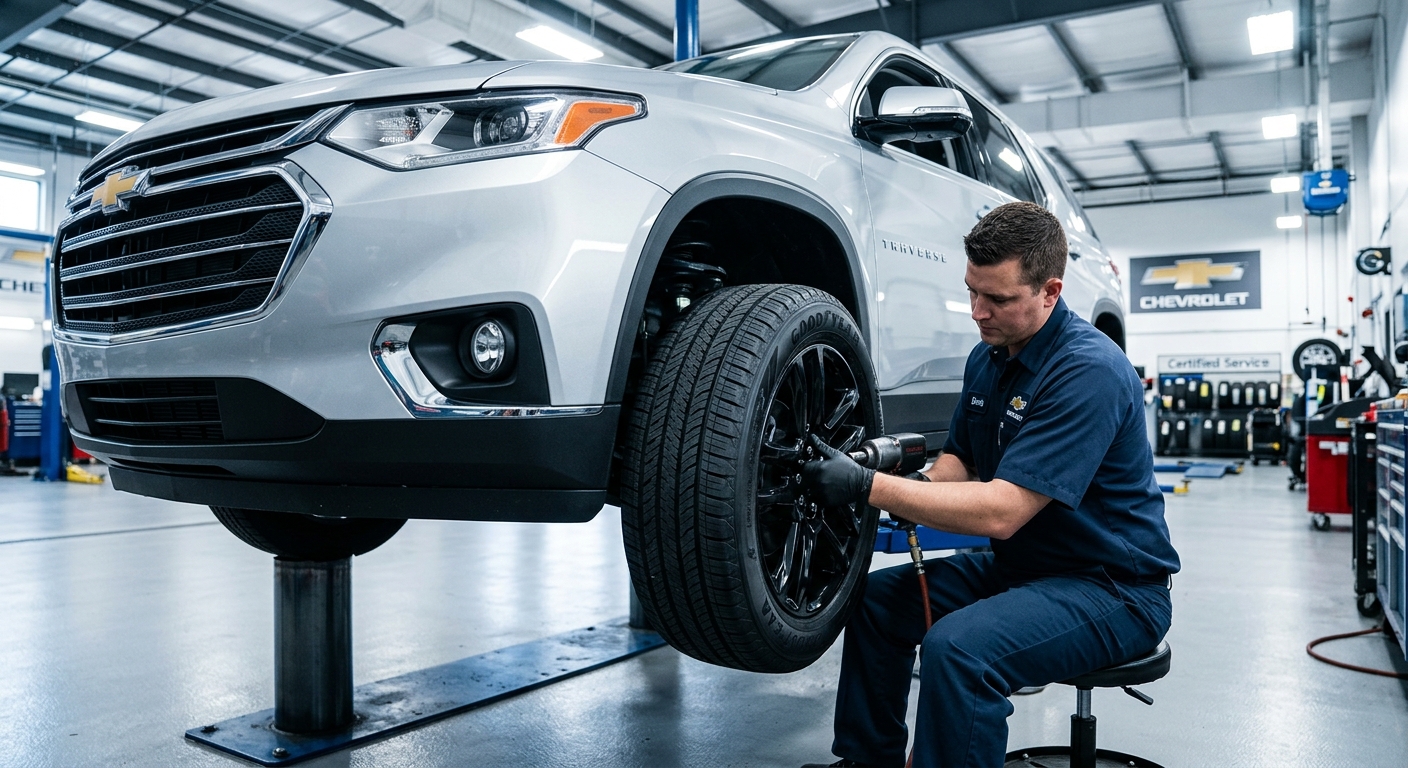
Front tires experience different physical forces than rear tires, especially during heavy braking and sharp steering maneuvers. Routinely rotating your tires spreads this wear evenly across all four wheels, which maximizes tread life and keeps the tread depth uniform. Consistent tread depth is vital for maintaining reliable traction, stable cornering, and predictable braking performance on wet or dry roads.
If you need to book an appointment, you can use our online service scheduler to find a time that fits your busy day. You can also check our current promotional service offers to save on your next visit. For those who prefer to drop by, we are located at 11982 US, suite c, Guntersville, AL 35976, or you can reach our service desk directly by calling (256) 578-9170 [1].
Table of Contents
- Establishing the Recommended Interval for Your Next Tire Rotation
- Understanding How Your Vehicle’s Drivetrain Dictates the Rotation Pattern
- Addressing Common Misconceptions About Skipping Scheduled Tire Maintenance
- Weighing Professional Service Against DIY Tire Rotations at Home
- Optimizing Tire Traction and Safety for Local Driving Conditions
Establishing the Recommended Interval for Your Next Tire Rotation
Most automotive manufacturers recommend rotating your tires every 5,000 to 7,500 miles, a window that conveniently aligns with standard oil change intervals [1][3][4][8]. Adhering to this schedule ensures that front and rear tires swap positions before uneven wear patterns become permanent. For example, daily commuters driving from Rainbow City to larger nearby job centers put consistent highway miles on their vehicles, making a strict 6-month or 5,000-mile rotation schedule essential to prevent early tire replacement.
Electric vehicles require an even tighter schedule due to their heavy battery packs and instant torque. Many EV manufacturers recommend rotating tires every 6,250 miles or whenever the tread depth difference reaches 2/32 of an inch [2]. If you notice your tread is already worn past the point of safe driving, you can browse our selection of new tires to find a matching set. Alternatively, if you are thinking about upgrading your entire ride, you can estimate your current trade-in value and explore our quality pre-owned vehicle inventory.
Understanding How Your Vehicle’s Drivetrain Dictates the Rotation Pattern
Drivetrain configurations play a direct role in how power is delivered to the road, which in turn dictates how your tires wear. On a front-wheel-drive vehicle, the front tires handle steering, braking, and power delivery, causing them to wear much faster than the rear tires [1]. For rear-wheel-drive and four-wheel-drive vehicles, we utilize a rearward cross pattern where the rear tires move straight forward to the front axle, and the front tires cross over to the opposite sides of the rear axle [1].
This pattern is particularly important for truck owners navigating the hilly agricultural terrain around Rainsville, where heavy hauling puts extra stress on the rear drive axle. When dealing with directional tires, which are designed to roll in only one direction, the tires must stay on the same side of the vehicle and only move front-to-back [1].
If you drive a family-sized new Chevrolet Tahoe, a hardworking new Chevrolet Silverado 1500, or a cutting-edge electric truck like the new Chevrolet Silverado EV, matching the pattern to the drivetrain is critical. You can check out our full range of setups by browsing our complete new Chevrolet inventory to see how different drivetrains perform.
Addressing Common Misconceptions About Skipping Scheduled Tire Maintenance
A common misconception among drivers is that tire rotations can be safely skipped if the tread looks visually even to the untrained eye. Subtle wear patterns along the inside edge of the tread or minor cupping are often difficult to spot without lifting the vehicle on a professional hoist. Neglecting this simple service leads to rapid, localized wear that ruins the tire prematurely, decreases fuel economy, and reduces wet-weather grip.
Over time, skipped maintenance can cause severe vibrations that put unnecessary stress on your wheel bearings and suspension components. Our experienced service team works hard to keep your vehicle performing safely; you can read more about our dealership’s history and commitment to quality service. If you are looking to secure a new vehicle with a fresh warranty and maintenance plan, you can also fill out our secure online credit application to get started on your purchase.
Weighing Professional Service Against DIY Tire Rotations at Home
While rotating tires at home is technically possible, doing it safely requires a significant investment in proper heavy-duty equipment. To perform a DIY rotation safely, you need a high-quality floor jack, at least four heavy-duty jack stands, wheel chocks, and a calibrated torque wrench to ensure the lug nuts are tightened to exact manufacturer specifications.
When our certified technicians perform this service, they do not just swap the wheels; they also inspect your brake pads for wear, check the suspension bushings, and examine the tire tread for embedded debris. This comprehensive inspection catches minor issues before they turn into costly roadside breakdowns.
If you prefer to customize your vehicle or need specialized tools, you can order genuine GM parts through our official accessories catalog. For those looking to transition into a new vehicle with a built-in maintenance program, our team can help you explore our competitive financing options.
Optimizing Tire Traction and Safety for Local Driving Conditions
Maintaining uniform tire tread is your best defense against unpredictable road conditions, especially during heavy Southern rainstorms that can cause hydroplaning. When tread depths are uneven, the vehicle’s electronic stability control and anti-lock braking systems cannot perform optimally because different tires have varying levels of grip.
If you ever experience a sudden tire failure or flat on the road, remember that every new Chevrolet comes with manufacturer-backed protection. You can reach the dedicated support line directly at Chevrolet Roadside Assistance: 1-800-243-8872 for professional towing, flat tire changes, or emergency fuel delivery.
For replacement tires, OEM parts, or specialized service, you can order directly from our factory parts department. If you need immediate assistance or want to speak with a specialist, please visit us at 11982 US, suite c, Guntersville, AL 35976, or give our service department a quick call today.
0 comment(s) so far on Why Regular Tire Rotations Keep Your Chevy Running Stronger for Longer