


The Truth About Oil Change – From a Service Expert’s Perspective
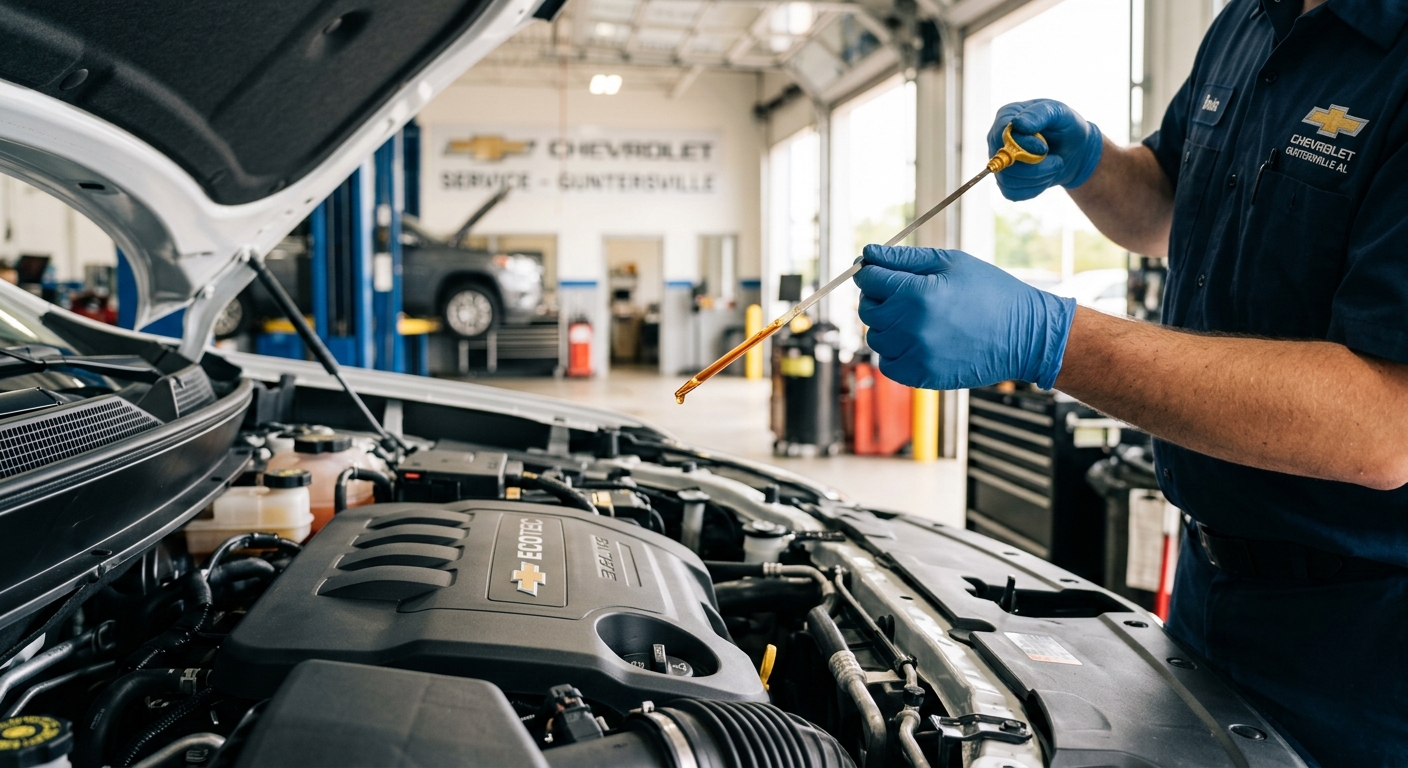
Why Engine Oil Maintenance Keeps Your Chevrolet Running Strong
To keep your vehicle performing at its best, we recommend staying ahead of your maintenance schedule. You can easily book your next visit online using our service scheduler, or you can give our service advisors a quick call to discuss your vehicle’s specific maintenance history. If you are looking to save on your next visit, be sure to check out our rotating Chevrolet special offers for current maintenance discounts. For drivers in the area, finding us is incredibly simple, and you can get turn-by-turn directions by viewing our location on Google Maps.
Table of Contents
- Is Full Synthetic Oil Worth the Extra Cost for Your Engine
- Understanding dexos Specifications and Selecting the Right Viscosity
- What Actually Happens Inside Your Engine When You Skip an Oil Change
- How the Chevrolet Oil Life Monitoring System Protects Your Investment
- Professional Service versus DIY Maintenance for Your Chevrolet
Is Full Synthetic Oil Worth the Extra Cost for Your Engine
Is full synthetic oil worth the extra cost? This is the single most common question I receive at the service counter, and the short answer is an absolute yes. While conventional oil is simply refined crude oil, full synthetic oil is chemically engineered from the ground up to feature highly uniform molecular structures. This advanced engineering means synthetic oil is far more stable at extreme temperatures, resists breakdown under heavy engine loads, and contains superior additive packages that actively prevent sludge formation. Over the lifespan of your vehicle, the improved protection of synthetic oil easily offsets its higher upfront price tag by preventing costly internal engine repairs.
Let’s look at how this plays out in real-world driving scenarios. If you are driving a midsize truck like the 2026 Chevrolet Colorado, which features a high-torque turbocharged engine, the oil is subjected to intense heat as it circulates through the turbocharger housing. Conventional oil can quickly cook and leave carbon deposits in these tight passages, whereas a high-quality full synthetic oil maintains its viscosity and flows freely to keep the turbo bearings cool. If you want to see how these advanced powertrains operate, you can shop the new Chevrolet Colorado or take a broader look at our lineup to explore Chevrolet models currently available on our showroom floor.
For those who are interested in transitioning away from traditional combustion engines entirely, we also offer exceptional all-electric options. Eliminating engine oil changes altogether is just one of many ownership benefits when you shop the new Chevrolet Bolt EUV. However, for our gas-powered and hybrid drivers, investing in premium synthetic oil remains the single best insurance policy you can buy for your engine’s long-term health.
Pricing
Pricing by trim
| Feature | Custom | Custom Trail Boss | High Country | LT | LT Trail Boss | LTZ | RST | Work Truck | ZR2 |
|---|---|---|---|---|---|---|---|---|---|
| Base MSRP | $42,400 | $52,900 | $62,900 | $47,900 | $59,700 | $58,100 | $51,400 | $36,900 | $71,800 |
| Destination charge | $2,795 | $2,795 | $2,795 | $2,795 | $2,795 | $2,795 | $2,795 | $2,795 | $2,795 |
Engine & Performance
Powertrain specs by trim
| Feature | Custom | Custom Trail Boss | High Country | LT | LT Trail Boss | LTZ | RST | Work Truck | ZR2 |
|---|---|---|---|---|---|---|---|---|---|
| Engine | 2.7L | 2.7L | 5.3L | 2.7L | 2.7L | 5.3L | 2.7L | 2.7L | 3.0L |
| Horsepower | 310 hp | 310 hp | 355 hp | 310 hp | 310 hp | 355 hp | 310 hp | 310 hp | 305 hp |
| Torque | 430 lb-ft | 430 lb-ft | 383 lb-ft | 430 lb-ft | 430 lb-ft | 383 lb-ft | 430 lb-ft | 430 lb-ft | 495 lb-ft |
| Transmission | 8-speed automatic | 8-speed automatic | 10-speed automatic | 8-speed automatic | 8-speed automatic | 10-speed automatic | 8-speed automatic | 8-speed automatic | 10-speed automatic |
| Drivetrain | Rear-wheel drive | Four-wheel Drive | Rear-wheel drive | Rear-wheel drive | Four-wheel Drive | Rear-wheel drive | Rear-wheel drive | Rear-wheel drive | Four-wheel Drive |
Understanding dexos Specifications and Selecting the Right Viscosity
One of the first things I teach our apprentice technicians is that not all synthetic oils are created equal. General Motors established the rigorous dexos licensing standard to ensure that oils used in Chevrolet vehicles meet strict performance thresholds for oxidation resistance, aeration control, and sludge prevention. For modern gasoline engines, you must look for the dexos 1 Gen 3 seal on the bottle, while diesel-powered models require specialized dexosD diesel oil. Using an oil that lacks these specific certifications can void your factory warranty and lead to premature component wear.
Viscosity ratings are equally critical and must match your specific engine’s engineering. Many newer Chevrolet passenger vehicles specify a highly fluid SAE 0W-20 viscosity to minimize internal drag and maximize fuel economy. However, certain heavy-duty or highly turbocharged engines require a slightly thicker hot viscosity, such as the SAE 5W-30 oil specified for the 2.7L Turbo engine. If you are driving a heavy-duty workhorse, such as when you shop the new Chevrolet Silverado HD, your engine requires specific oil formulations designed to handle extreme towing and hauling demands.
Selecting the wrong oil viscosity can trigger a check engine light, reduce fuel efficiency, or restrict oil flow during cold starts. We always recommend checking your oil fill cap or consulting your owner’s manual to verify your vehicle’s exact requirements. If you are driving an electric model, such as when you shop the new Chevy Blazer EV, or managing a commercial fleet where you shop the new BrightDrop 400 inventory, your powertrain maintenance needs will look very different, but for combustion engines, matching the exact viscosity and dexos specification is non-negotiable.
What Actually Happens Inside Your Engine When You Skip an Oil Change
Many of our customers wonder what actually occurs deep inside their engine block when they push past their recommended oil change date. As oil ages, its protective chemical additives—including detergents, dispersants, and anti-wear agents like zinc and phosphorus—gradually deplete. At the same time, the oil absorbs combustion byproducts, carbon soot, moisture, and road dust. This contamination causes the oil to turn black, lose its lubricity, and eventually thicken into a gelatinous black sludge that settles in the oil pan and cylinder head.
Once sludge begins to form, it poses an immediate threat to your entire engine. This thick muck can easily clog the tiny pickup screen on your oil pump, starving the upper cylinder head of lubrication and damaging the pump itself. Without proper oil circulation, friction rises rapidly, causing the engine to run hot and potentially trigger a check engine light due to issues with oil pressure sensors or variable valve timing solenoids. If left unchecked, the extreme heat and friction will eventually cause metal components to expand and weld together, resulting in a completely seized engine that requires a total rebuild or replacement.
This level of neglect is especially damaging to large family vehicles that carry heavy passenger loads. For example, families who shop the new Chevrolet Suburban need consistent, reliable lubrication to protect their large V8 engines during long road trips. The same rule applies to everyday commuters who shop the new Chevrolet Equinox or business owners who shop the new Chevrolet commercial vehicles for daily deliveries. Routine oil changes are a minor investment that prevents these catastrophic, multi-thousand-dollar engine failures.
How the Chevrolet Oil Life Monitoring System Protects Your Investment
Here’s what you need to know about how your modern Chevrolet tracks its own maintenance needs. Gone are the days of relying solely on a generic windshield sticker or a strict mileage count. Most newer Chevrolet models come standard with an advanced Oil Life Monitoring System (OLMS). Rather than using a physical sensor to analyze the chemical state of the oil, this system uses a sophisticated software algorithm that tracks engine revolutions, operating temperatures, ambient climate conditions, and individual driving habits to calculate precisely when the oil is nearing the end of its useful life.
If your daily routine consists of short trips under five miles around Albertville, where the engine rarely reaches its optimal operating temperature, the OLMS will intelligently shorten your service interval. Short trips prevent the engine from getting hot enough to burn off condensation and raw fuel that naturally seep into the crankcase, meaning the oil degrades much faster than it would during steady highway driving. Conversely, if you spend most of your time cruising at highway speeds, the system will allow you to go further between service appointments, up to the maximum recommended limit of 7,500 miles or 12 months.
This smart technology ensures that drivers who shop the new Chevrolet Tahoe or shop the new Chevrolet Blazer receive customized alerts tailored to their exact usage patterns. When you browse our new Chevrolet inventory, you can rest assured that your vehicle’s onboard computer is constantly working behind the scenes to protect your powertrain. When the “Change Engine Oil Soon” message illuminates on your driver information center, it is highly recommended to schedule your service within the next 500 to 1,000 miles to prevent rapid additive depletion.
Professional Service versus DIY Maintenance for Your Chevrolet
Let me explain how a professional oil change at our dealership compares to doing the job yourself in your driveway. While a basic oil change seems straightforward, performing this service at home requires purchasing the correct dexos-certified oil, buying an OEM-quality filter, storing specialized tools, and finding a local facility that accepts dirty oil disposal. Furthermore, working under a vehicle on jack stands carries inherent safety risks that are easily avoided by leaving the job to certified professionals.
When you bring your vehicle to our service center, you receive far more than just fresh oil and a new filter. Our factory-trained technicians perform a comprehensive multi-point inspection on every vehicle that enters our bays. We check your brake pad thickness, inspect your steering and suspension components, test your battery health, and top off your essential fluids. For rural drivers commuting from Crossville, where daily travel often involves driving over unpaved farm roads and navigating dusty terrain, these regular professional inspections are vital for catching minor wear and tear before it develops into a major breakdown on a remote road.
Our service department is fully equipped with specialized diagnostic equipment designed specifically for your vehicle’s advanced systems. Whether you are driving a traditional gasoline model or looking to transition to an electric vehicle when you shop the new Chevrolet Bolt, our team has the training and expertise to keep your vehicle running safely. For professional care you can trust, stop by our service drive or get in touch with our team using the contact details below.
Guntersville Chevrolet Service Department
- Address: 11982 US, suite c, Guntersville, AL 35976
- Phone: (256) 578-9170
0 comment(s) so far on The Truth About Oil Change – From a Service Expert’s Perspective