


Can You Trade In Your Current Vehicle at a Local Dealership When Buying a New Chevy SUV?
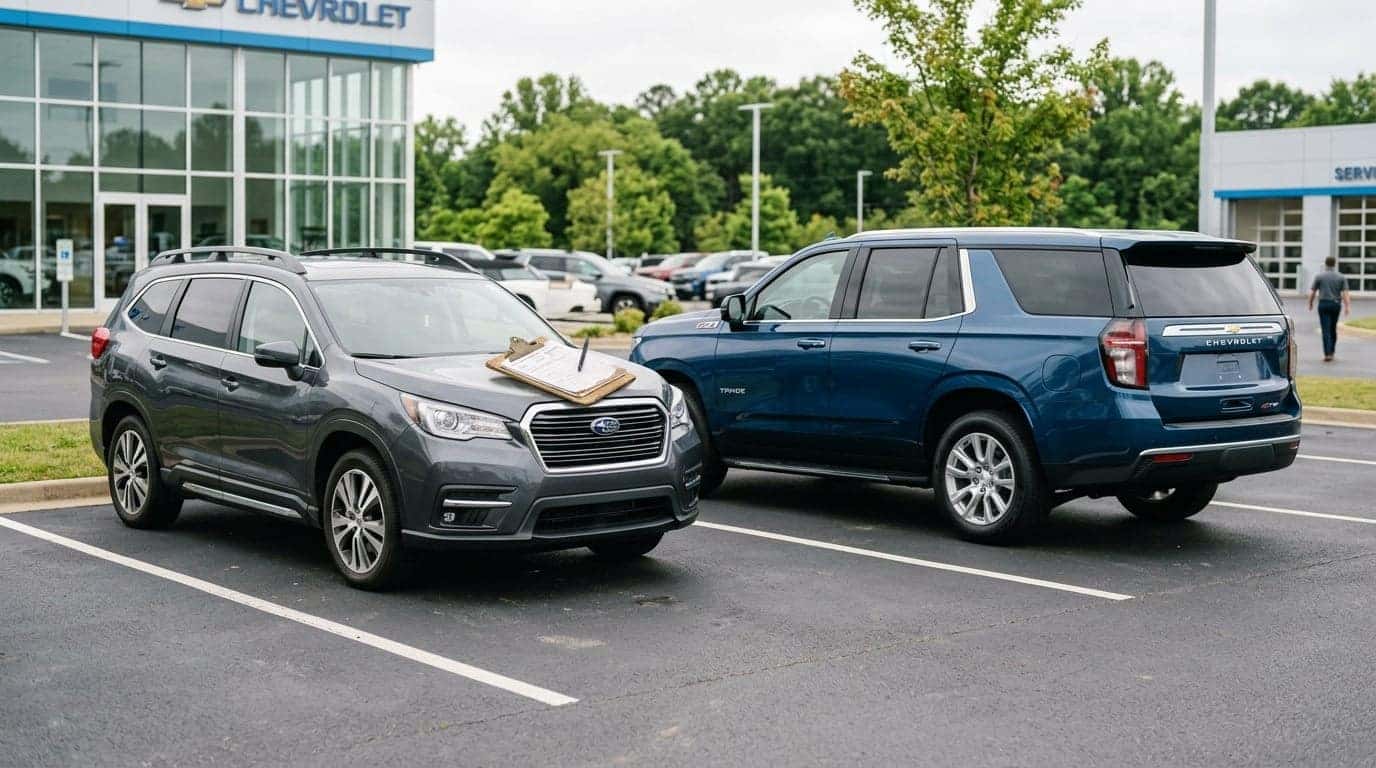
Yes, you can trade in almost any vehicle make, model, or condition at Guntersville Chevrolet when purchasing a new Chevy SUV. Our appraisal team evaluates your current vehicle’s fair market value and applies that dollar amount directly as a down payment toward your purchase or lease, instantly reducing your total transaction balance.
Trading in your vehicle at a franchised dealership eliminates the delays, personal safety risks, and administrative headaches associated with selling a car on your own. When you bring your car to our showroom, our team performs a fast physical inspection, pulls real-time market data, and presents you with an official cash offer. You can choose to apply that entire offer as equity toward a new crossover like the 2026 Chevrolet Equinox or a spacious three-row model like the 2026 Chevrolet Traverse.
For drivers coming off the Sand Mountain plateau from Albertville, trading in locally makes the transition to a new SUV completely seamless. You can drive to our lot in your current vehicle and drive home the same day in a new Chevrolet with all title transfers, lien payoffs, and state paperwork handled by our business department.
If you are ready to evaluate your options, you can browse our current new Chevrolet inventory online, visit our showroom located on US Highway 431, or give our sales team a quick call to learn how much equity your current vehicle holds.
Table of Contents
- How Do Chevy Dealerships Determine Trade-In Value vs Private Sale Value?
- Can You Trade In a Vehicle With an Outstanding Loan on a New Chevy SUV?
- How Does Trading In a Car Lower Your Sales Tax on a New Chevy SUV?
- What Are Current Financing Deals, Cash Allowances, and Trade Bonuses on Chevy SUVs?
- How to Negotiate for a Higher Trade-In Value at the Dealership
- What Checklist and Documents Do You Need When Trading In Your Car?
- Quick Answers About Trading In for a Chevy SUV
- Take the Next Step Toward Your New Chevy SUV
How Do Chevy Dealerships Determine Trade-In Value vs Private Sale Value?
Dealership trade-in values are calculated using live wholesale auction data, regional supply and demand metrics, vehicle condition reports, and reconditioning costs, whereas private sale values represent the full retail price an individual buyer pays directly.
While private sale prices can sometimes appear higher on paper, that difference accounts for the significant time, effort, and expense required to sell a vehicle independently. Private sellers must pay for advertising, handle inquiries from unfamiliar buyers, schedule public meetings, manage test drives, and risk dealing with fraudulent payment methods or unfulfilled bank transfers. Additionally, private sales offer zero safety guarantees or tax advantages for the seller.
In contrast, our dealership appraisal process relies on real-time market software that cross-references live sales data for vehicles matching your exact year, trim, mileage, and condition. We also account for any mechanical maintenance or cosmetic detailing required to prepare the car for our lot.
When evaluating potential trade-in vehicles, our team examines engine performance, transmission smoothness, frame integrity, and exterior condition. For instance, compact SUV buyers comparing specs often look at powertrain configurations; a 2026 Chevrolet Equinox LT 1.5T features a 1.5L engine generating 175 hp and 184 lb-ft of torque paired with a CVT in Front-wheel drive, while the AWD LT 1.5T pairs that same 1.5L engine with an 8-speed Hydra-Matic transmission for 203 lb-ft of torque and All-wheel drive. Higher output or highly sought-after configurations command stronger trade-in demand in our local market.
To start estimating your car’s equity before visiting us, you can value your trade-in online or explore our pre-owned vehicle selection to see how comparable models are currently valued in the region.
Engine & Performance
Powertrain specs by trim
| Feature | ACTIV 1.5T | AWD ACTIV 1.5T | AWD LT 1.5T | AWD RS 1.5T |
|---|---|---|---|---|
| Engine | 1.5L | 1.5L | 1.5L | 1.5L |
| Horsepower | 175 hp | 175 hp | 175 hp | 175 hp |
| Torque | 184 lb-ft | 203 lb-ft | 203 lb-ft | 203 lb-ft |
| Transmission | CVT | Hydra-Matic | Hydra-Matic | Hydra-Matic |
| Drivetrain | Front-wheel drive | All-wheel drive | All-wheel drive | All-wheel drive |
Engine & Performance (continued)
| Feature | LT 1.5T | RS 1.5T |
|---|---|---|
| Engine | 1.5L | 1.5L |
| Horsepower | 175 hp | 175 hp |
| Torque | 184 lb-ft | 184 lb-ft |
| Transmission | CVT | CVT |
| Drivetrain | Front-wheel drive | Front-wheel drive |
Can You Trade In a Vehicle With an Outstanding Loan on a New Chevy SUV?
You can trade in a vehicle with an outstanding loan; the dealership contacts your lender to obtain an official 10-day payoff statement and pays off the remaining loan balance on your behalf during the purchase.
When trading in a vehicle with an active loan, the financial balance falls into one of two categories:
- Positive Equity: Your vehicle’s trade-in value is greater than your remaining loan balance. For example, if your car is appraised at $18,000 and your loan payoff is $14,000, you have $4,000 in positive equity to use directly as a down payment on your new Chevy SUV.
- Negative Equity: Your remaining loan balance exceeds the trade-in value of the vehicle. If your car is appraised at $12,000 but your loan payoff is $15,000, you have $3,000 in negative equity.
If you have negative equity, you do not necessarily have to pay the difference out of pocket. In many cases, our finance department can structure your new auto loan to roll that remaining balance into your new monthly payment, subject to lender credit approval guidelines. This allows you to upgrade to a modern, reliable SUV without waiting months to clear your existing loan balance.
Our finance specialists work with GM Financial and multiple regional lenders to make this transition as smooth as possible. You can take the first step today by choosing to apply for auto financing online or reviewing our certified pre-owned inventory to see eligible vehicles that fit your financial plan.
How Does Trading In a Car Lower Your Sales Tax on a New Chevy SUV?
Trading in a vehicle reduces your total sales tax liability because state and local regulations allow sales tax to be calculated solely on the net price difference between your new vehicle purchase price and your trade-in allowance.
When you purchase a vehicle without a trade-in, you pay sales tax on the full purchase price of the new SUV. When you trade in a vehicle, your trade allowance acts as a direct price offset before taxes are calculated.
Consider this example: if you select a new Chevrolet SUV priced at $36,000 and receive a $14,000 trade-in allowance for your current car, your taxable purchase amount drops to $22,000. Depending on local tax rates, this credit saves buyers hundreds or even thousands of dollars in total out-of-pocket costs—a financial benefit that private sales cannot provide.
Suburban commuters traveling the Highway 77 corridor around Rainbow City frequently utilize trade-in tax offsets to make higher SUV trim levels or all-wheel-drive packages far more affordable. The tax savings directly lower the total loan amount financed, reducing monthly payments and total interest paid over the life of the loan.
To keep your current vehicle operating smoothly until you are ready to trade it in, you can easily schedule a service appointment with our factory-trained technicians for routine maintenance.
What Are Current Financing Deals, Cash Allowances, and Trade Bonuses on Chevy SUVs?
Chevrolet frequently offers competitive factory incentives, including low-APR promotional financing through GM Financial, customer cash allowances, and dedicated trade-in assistance bonuses designed to maximize your purchase value.
For shoppers looking to buy a new crossover, national programs often feature rates like 1.9% APR for 36 months on select 2026 Chevrolet Equinox models or 2.9% APR for 48 months on the 2026 Chevrolet Trax for well-qualified buyers. These promotional interest rates significantly reduce finance charges over the term of your contract compared to standard market interest rates.
Additionally, Chevrolet regularly structures cash allowance programs that can be combined with trade-in bonuses:
- Customer Cash Allowances: Direct price reductions provided by the manufacturer applied straight to the final purchase price.
- Trade Assistance Bonuses: Specific cash incentives offered when you trade in an eligible 2012 model year or newer vehicle toward a qualifying new Chevy SUV or truck.
- Conquest and Loyalty Offers: Targeted allowances available to current owners or lessees of eligible GM or non-GM vehicles upgrading to a new Chevrolet model.
Combining a strong trade-in valuation, state sales tax offsets, and factory trade assistance bonuses allows buyers to build substantial down payment equity. This combination keeps monthly payments manageable while granting access to premium features like Chevy Safety Assist with standard Automatic Emergency Braking, Forward Collision Alert, and Lane Keep Assist with Lane Departure Warning.
If you ever need genuine factory components or replacement care for your current vehicle prior to trade-in, you can order directly through our official GM parts portal.
How to Negotiate for a Higher Trade-In Value at the Dealership
Maximizing your trade-in value requires arriving at the dealership prepared with independent valuation research, complete service records, and a clean, well-maintained vehicle.
To secure the highest possible offer during your appraisal, consider these practical steps:
- Clean the Vehicle Thoroughly: Wash the exterior, vacuum the cabin, clean the windows, and remove all personal belongings. A clean car signals to the appraiser that the vehicle was well cared for by its previous owner.
- Gather Maintenance Records: Bring physical receipts or digital logs showing regular oil changes, tire rotations, brake services, and completed multi-point inspections. Proof of consistent upkeep reassures the appraiser regarding mechanical health.
- Address Minor Cosmetic Fixes: Fix inexpensive issues like replacing a burnt-out headlight bulb, topping off fluids, or buffing out minor surface scratches. Avoid paying for major bodywork or costly mechanical repairs, as you rarely recoup the full retail cost of those fixes at trade-in.
- Bring All Equipment and Keys: Ensure both original key fobs, the owner’s manual, factory floor mats, and spare tire tools are inside the vehicle. Missing key fobs can cost hundreds of dollars to replace, which appraisers factor into reconditioning deductions.
When shoppers walk into our showroom, our appraisal team walks through the inspection report line-by-line so you understand exactly how your car is evaluated.
You can also browse our official GM accessories catalog to explore custom cargo organizers, all-weather floor liners, or roof racks to equip your next SUV once your trade-in is complete.
What Checklist and Documents Do You Need When Trading In Your Car?
To complete a trade-in transaction in a single visit, you must bring your vehicle title or payoff information, registration, photo identification, insurance card, and all sets of keys.
Arriving with all required paperwork prevents delays and ensures our finance department can finalize your loan paperwork without delay. Use this quick checklist before driving to the lot:
- Vehicle Title or Lien Information: If you own the car outright, bring the original physical title. If you have an active loan, bring your lender’s name, loan account number, and 10-day payoff statement.
- Current Vehicle Registration: Ensure your state registration is current and matches the name on your photo ID.
- Valid Government-Issued Photo ID: A driver’s license or passport for all named owners listed on the vehicle title.
- Proof of Auto Insurance: Your current insurance card or digital policy documentation needed to transfer coverage to your new Chevrolet SUV.
- All Keys and Remotes: Every original master key, spare key, and remote key fob.
- Owner’s Manuals and Accessories: The original vehicle manuals, wheel lock keys, and factory cargo accessories.
Having these items ready guarantees a smooth, stress-free transaction from appraisal to delivery.
Our team is ready to walk you through every step of the vehicle appraisal process. You can find our showroom address in Guntersville or call us directly at (256) 578-9170 to speak with an appraisal specialist today.
Quick Answers About Trading In for a Chevy SUV
Q: How long does a trade-in appraisal take at the dealership?
A physical trade-in appraisal at our dealership typically takes 15 to 30 minutes. During this time, an appraisal specialist inspects the exterior body panels, interior condition, tire tread depth, and under-hood components before taking the vehicle on a short test drive to check transmission shifting and braking performance. Once complete, the manager enters the vehicle’s specifics into our valuation software to generate a binding written cash offer valid for your purchase decision.
Q: Do I need to schedule an appointment before bringing my car in for an appraisal?
While walk-in trade-in appraisals are always welcome during standard business hours, scheduling an appointment in advance helps speed up the process. Setting a time ensures a dedicated sales advisor and vehicle appraiser are ready the moment you arrive on the lot. This minimizes your wait time and allows our team to have comparative market data prepared before you walk through the doors.
Q: Can I trade in a leased vehicle from a different brand for a new Chevy SUV?
Yes, in many cases you can trade in a leased vehicle from another manufacturer prior to your lease term ending. Our finance department contacts the leasing company to request the current dealer buyout figure, which is then compared against your vehicle’s appraised market value. If the market value exceeds the buyout price, you can apply that equity toward your new Chevrolet purchase. However, certain brand lenders enforce specific lease return restrictions, so our team will verify your contract rules beforehand.
Q: Will making minor repairs before trading in increase my vehicle’s appraisal value?
Addressing quick, low-cost maintenance items like washing the vehicle, detailing the interior, fixing a blown fuse, or topping off windshield washer fluid helps maximize your appraisal score. However, spending money on major mechanical repairs or extensive paint work is generally not recommended. Dealerships perform reconditioning at wholesale shop labor and parts rates, meaning an appraiser can fix minor damages far more cost-effectively than a customer paying retail service rates.
Q: What key documents should I gather before visiting the sales floor?
Before driving to the dealership, gather your physical vehicle title (or loan payoff statement with account number), valid vehicle registration card, current government-issued photo ID, proof of automobile insurance, and all original vehicle keys and key fobs. If applicable, bringing complete routine maintenance receipts also provides valuable proof of care that supports a higher trade offer.
Take the Next Step Toward Your New Chevy SUV
Trading in your current vehicle is the fastest, most cost-effective path toward driving home in a modern Chevrolet crossover or SUV. By combining your vehicle’s net equity with state sales tax savings and current manufacturer incentives, you can lower your initial outlay and enjoy manageable monthly payments on a dependable new model.
Whether you need a compact daily driver like the Equinox or a full-size passenger vehicle for family trips, our team at Guntersville Chevrolet is dedicated to providing transparent trade valuations and professional guidance without pressure. We handle all title transfers, lien payoffs, and state registry paperwork on-site so you can focus entirely on enjoying your new drive.
To start your trade-in evaluation today, stop by our showroom on US Highway 431, explore our inventory online, or call our sales team directly to schedule your personalized trade appraisal and test drive experience.
0 comment(s) so far on Can You Trade In Your Current Vehicle at a Local Dealership When Buying a New Chevy SUV?