Why Regular Oil Changes are the Heartbeat of Your Vehicle

May 13th, 2026 by

Imagine your engine as a complex, high-performance athlete. Every piston stroke, very valve opening, and every rotation of the crankshaft happens at incredible speeds and under immense pressure. In this high-stakes environment, engine oil is far more than just a lubricant; it is the lifeblood that keeps the entire system from seizing into a solid block of metal. At Guntersville Chevrolet, we see hundreds of vehicles weekly, and the single most consistent factor in long-term reliability isn’t the model or the year—it’s how frequently the owner prioritizes fresh oil. If you want to keep your car running like new on the roads around Alabama, understanding the vital role of this fluid is the first step in responsible ownership.

Preventative maintenance is often viewed as a chore, but it is actually the most cost-effective financial strategy you can employ for your vehicle. A simple service visit is a fraction of the cost of an engine rebuild or a full replacement. When oil is fresh, it flows effortlessly, coating every surface with a protective film that prevents catastrophic failure. However, as oil ages, it loses its chemical integrity. It begins to thin out or, conversely, thicken into a sludge that chokes the engine’s internal passages. By staying ahead of this degradation, you aren’t just following a manual; you are actively extending the life of your investment. Whether you are driving a new Chevrolet Silverado 1500 or a well-loved commuter, the principle remains the same: fresh oil equals a longer life.

For residents in our community, keeping a vehicle in peak condition is essential for daily life, from commuting to work to weekend trips to the lake. If you are ready to ensure your vehicle is ready for the long haul, Get Directions to Guntersville Chevrolet today or Call us at (256) 578-9170 to speak with an expert about your specific maintenance schedule. We are here to help you navigate the complexities of automotive care with transparency and expertise.
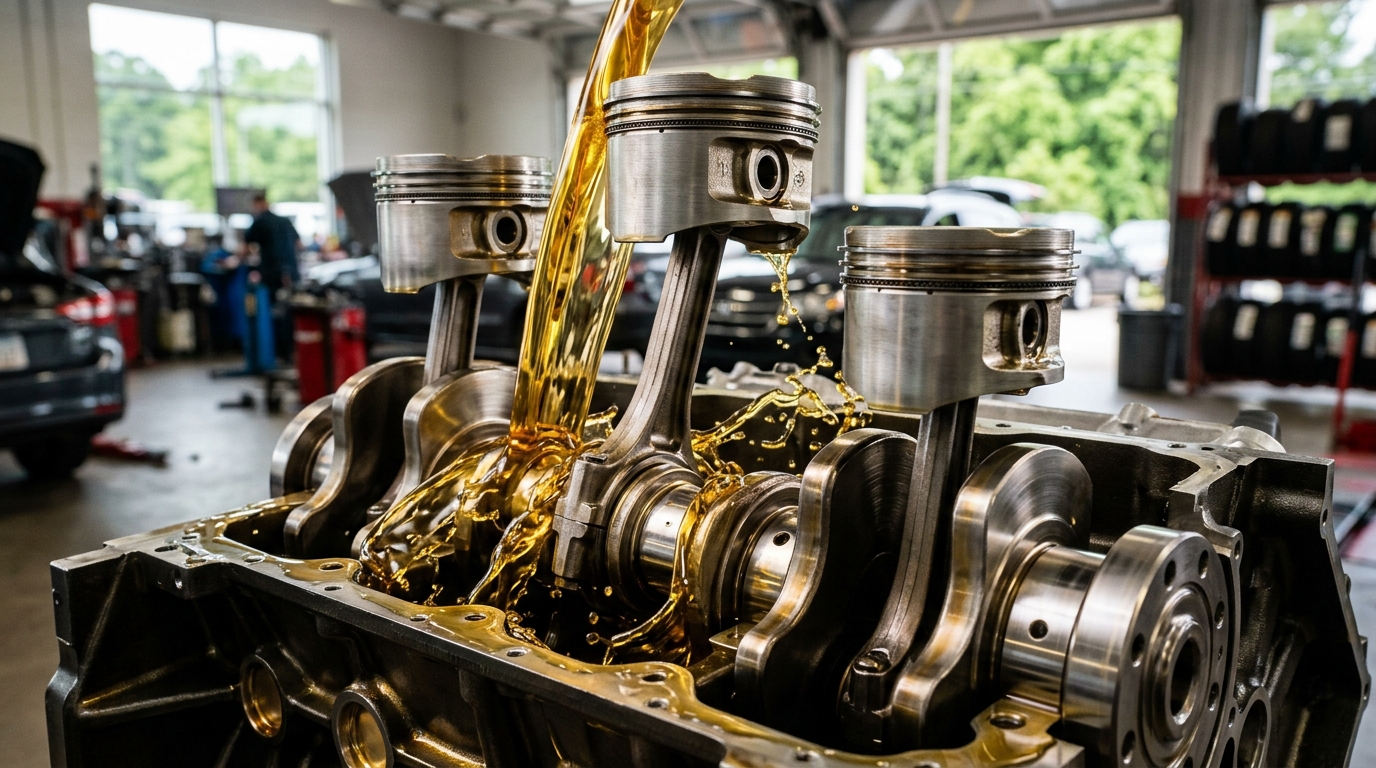
 

AI generated: Macro photography of a modern high-performance engine interior, intricate steel pistons and polished crankshaft in motion, viscous translucent amber oil cascading over metallic components like golden lifeblood, cinematic dramatic lighting with warm internal glows reflecting off chrome surfaces, hyper-realistic textures of brushed metal and fluid droplets, shallow depth of field with a blurred professional dealership service bay in the background, soft Alabama daylight filtering through large windows, lush southern greenery visible through distant glass, vibrant color palette of deep metallic charcoal and glowing liquid gold, clean and powerful atmosphere, high-resolution automotive engineering aesthetic, artistic focus on the fluid motion of lubrication and the mechanical heartbeat of a vehicle.

The Essential Functions of Engine Oil


Engine oil performs a multi-faceted role that many drivers overlook. Its primary duty is lubrication. Inside your engine, thousands of metal components interact at high velocities. Without a microscopic layer of oil separating these parts, the resulting friction would generate enough heat to weld the metal together in seconds. This lubrication reduces the energy required to move parts, which directly influences how smoothly your engine runs. When you Shop New Chevrolet Tahoe models, you’ll find engines designed for high efficiency, but even the most advanced engineering requires top-tier lubrication to function.

Beyond just making things slippery, oil acts as a secondary cooling agent. While your radiator and coolant handle the bulk of temperature regulation, they cannot reach the deepest recesses of the engine block. Oil circulates through these tight spaces, absorbing heat from the combustion chamber and the underside of the pistons. It then carries this heat back to the oil pan, where it can dissipate. This process prevents localized ‘hot spots’ that can lead to warped components or blown gaskets. Regular changes ensure the oil maintains its thermal capacity.


The third critical pillar of oil’s job is cleaning. As your engine burns fuel, it naturally produces microscopic soot, carbon deposits, and metal shavings. High-quality engine oil contains detergents and dispersants designed to suspend these contaminants and carry them to the oil filter. This prevents harmful buildup on delicate valve trains and cylinder walls. Over time, however, the oil becomes saturated with these particles. Once the oil can no longer hold any more debris, it begins to deposit that dirt back into the engine, creating a abrasive paste that accelerates wear.

By ensuring you are using the right lubricants, you are essentially providing a continuous internal bath for your engine. This is particularly important for high-towing vehicles like those you might find when you Shop New Chevrolet Silverado 3500. These engines work harder and generate more contaminants, making the cleaning function of the oil absolutely vital. At Guntersville Chevrolet, we prioritize using the correct viscosity and grade to ensure these three functions—lubrication, cooling, and cleaning—are performed perfectly every single time you start your ignition.


Preventing Internal Friction and Component Wear


To understand the technical importance of oil, one must look at the microscopic reality of engine surfaces. Even the most polished metal parts have peaks and valleys when viewed under a microscope. When two metal surfaces slide against each other, these peaks collide, creating friction, heat, and physical wear. Engine oil acts as a ‘hydrodynamic wedge,’ essentially floating the moving parts on a thin film so they never actually touch. This barrier is what allows a modern engine to last for 200,000 miles or more. When that barrier breaks down due to old, thin oil, the result is ‘metal-on-metal’ contact, which creates fine metal dust that acts like sandpaper inside your engine.

This wear is most aggressive during ‘cold starts’—the first few seconds after you turn the key. Most engine wear actually occurs during this period before the oil has had a chance to reach full operating temperature and circulate. High-quality, fresh oil is engineered to cling to surfaces even when the engine is off, providing a head start on protection. If your oil is old and has lost its ‘tackiness’ or viscosity, your engine is essentially running dry for those first few critical seconds. This is why consistent service is non-negotiable for those who Shop New Chevrolet Equinox for their daily family commute; you want that protection there every single morning.
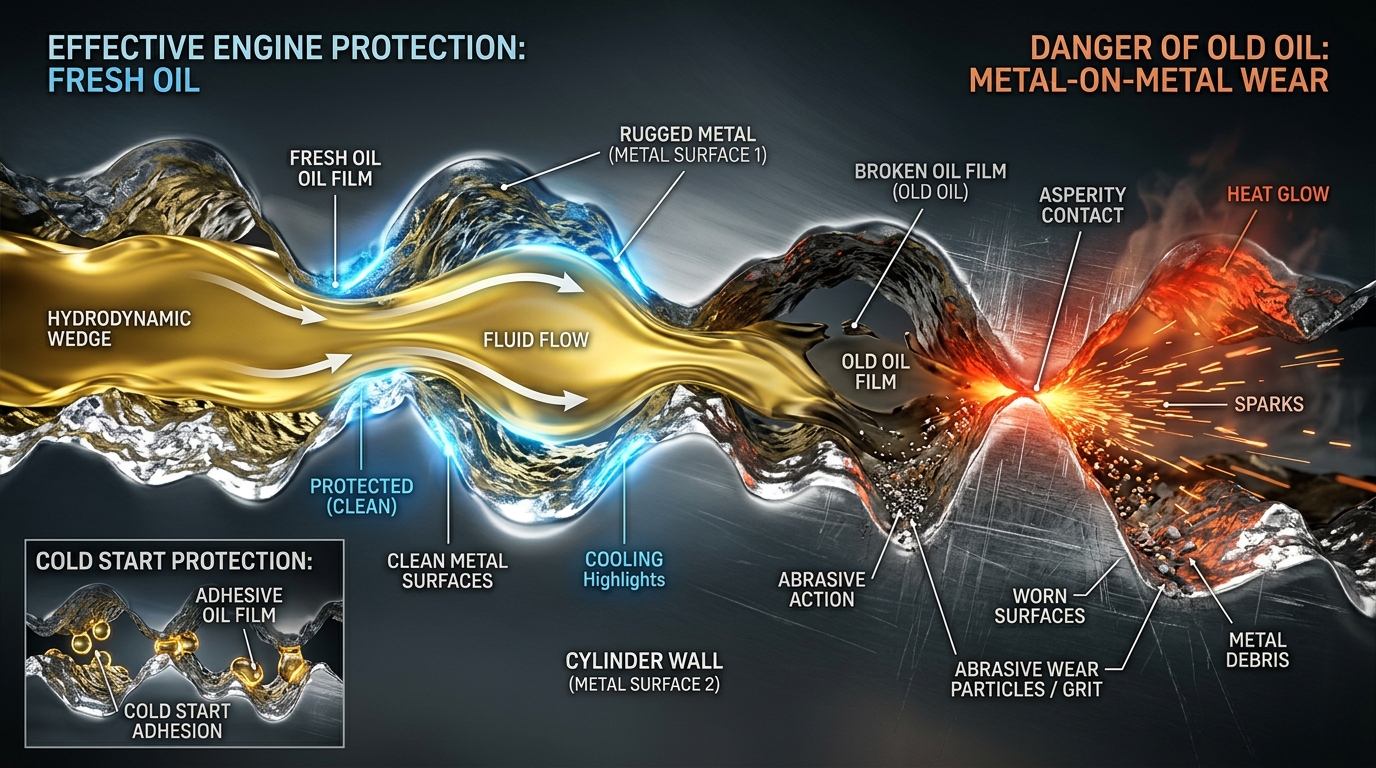
 

AI generated: Create a highly detailed microscopic cutaway visualization of engine protection showing two polished metal engine surfaces under extreme magnification. The metal surfaces should reveal tiny peaks and valleys, like rugged microscopic terrain. Between them, show a thin, glowing golden layer of fresh engine oil forming a smooth hydrodynamic wedge that keeps the metal surfaces separated and floating without contact. On one side of the image, show the protected area: clean golden oil film, smooth motion arrows, reduced friction, and cool blue highlights suggesting protection and durability. On the opposite side, subtly contrast the danger of old oil: thinning, broken oil film, metal peaks touching, red-orange heat glow, sparks, and fine metallic dust particles acting like abrasive sandpaper. Include a small visual cue for cold-start protection, such as oil droplets clinging to the metal peaks before movement begins. Style the image as a premium automotive technical illustration with cinematic lighting, realistic metallic textures, sharp microscopic detail, and clean educational callout space. The overall message should be: fresh oil prevents metal-on-metal contact and protects the engine from microscopic wear.

Temperature Regulation and Heat Management


Thermal Breakdown: High temperatures cause oil to oxidize. This chemical reaction changes the oil’s molecular structure, making it less effective at absorbing heat and more prone to forming harmful acids. Fresh oil has the chemical ‘stamina’ to withstand the heat of a long Alabama summer without breaking down.


Engine Hot Spots: Coolant handles the radiator and block, but oil is the only fluid that touches the hottest parts of the pistons and bearings. By efficiently carrying heat away from these zones, oil prevents the metal from expanding too much, which could cause the engine to ‘seize’ or lock up entirely.


Viscosity Stability: As oil heats up, it naturally thins. Modern oils use ‘viscosity index improvers’ to keep the oil thick enough to protect at high temps. These additives wear out over time, leaving your engine vulnerable during high-stress driving or towing in Guntersville heat.


The Danger of Engine Sludge and Carbon Buildup
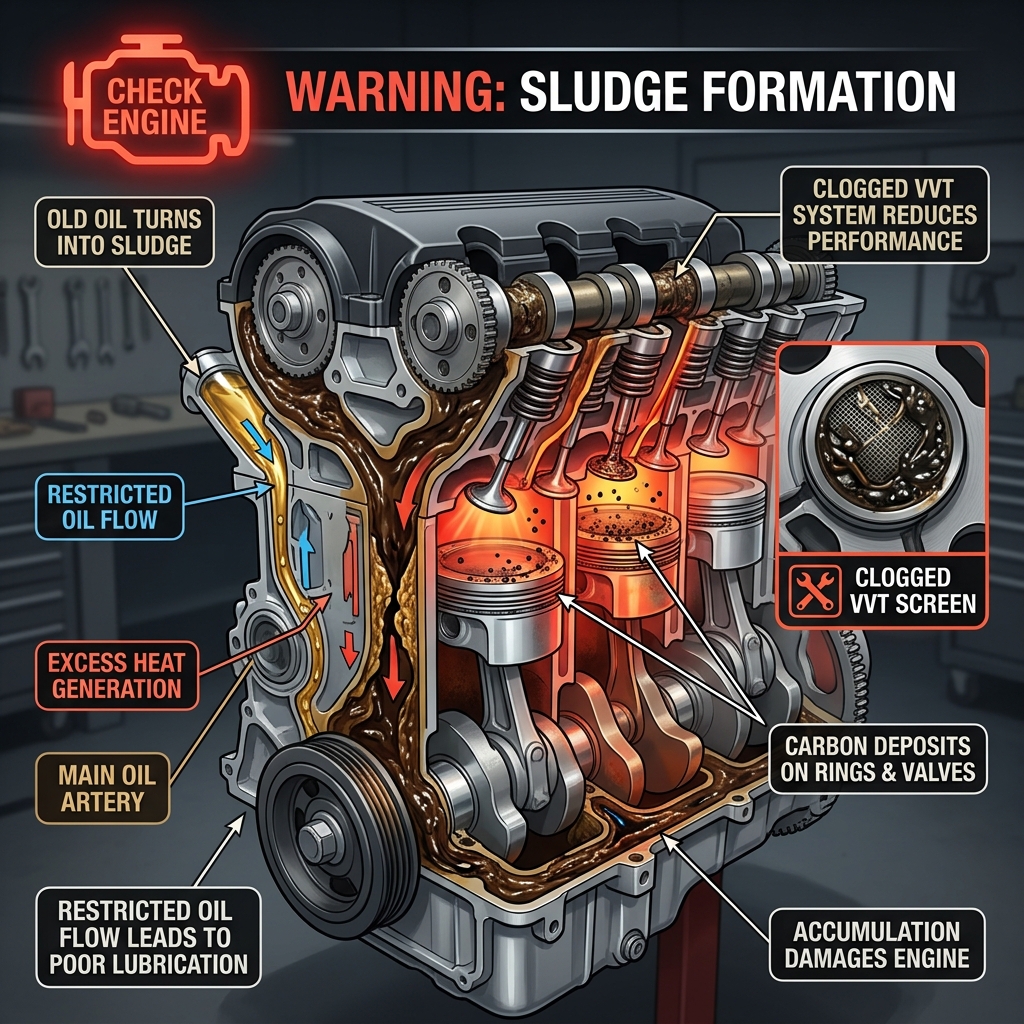
 

One of the most terrifying words in automotive repair is ‘sludge.’ Sludge is the gel-like substance that forms when oil has been pushed past its limits. It is a combination of oxidized oil, moisture, and unburnt fuel that has partially solidified. Once sludge starts to form, it acts like a clog in an artery. It restricts the flow of fresh oil to critical components, starving the engine of lubrication and cooling. This leads to a vicious cycle where the engine runs hotter, which creates more sludge, which causes even more heat.

Carbon buildup is another silent killer. When oil gets too old, it can no longer keep carbon particles in suspension. These particles settle on valves and piston rings, preventing them from sealing properly. This leads to ‘blow-by,’ where combustion gases leak into the crankcase, further contaminating the oil and reducing engine power. For those who Shop New Chevrolet Traverse models, keeping the sophisticated variable valve timing (VVT) systems clean is essential. Sludge can easily clog the tiny oil screens that control these systems, leading to check engine lights and poor performance.


AI generated: Create a dramatic automotive engine sludge warning illustration showing a cutaway view inside a modern gasoline engine. Highlight thick, dark brown-black sludge forming in oil passages, looking gel-like and sticky as it clogs narrow channels like plaque in an artery. Show fresh golden oil struggling to flow past the blockage toward critical engine components. Include visual warning cues: red-orange heat glow around affected areas, restricted oil flow arrows, a glowing check engine icon, and small carbon particles settling on valves and piston rings. Show the consequences clearly but realistically: poor lubrication, excess heat, contaminated oil, and reduced performance. Add a focused detail area showing a tiny variable valve timing oil screen partially clogged with sludge and carbon debris. The style should be a premium technical automotive cutaway with realistic metal textures, cinematic lighting, sharp contrast between clean golden oil and dirty sludge, and clean space for educational callouts. The overall message should be: old oil can turn into sludge, restrict oil flow, clog VVT systems, and damage the engine.

Maximizing Fuel Economy through Reduced Drag


In an era of fluctuating gas prices, every driver is looking for ways to improve their miles per gallon (MPG). One of the simplest and most effective ways to do this is by maintaining fresh oil. When oil is clean and has the correct viscosity, it minimizes ‘parasitic loss.’ This is the energy the engine has to spend just to move its own internal parts. When the oil is old and thick, or when friction is high due to degraded fluid, the engine has to work harder to overcome that resistance. This means you are burning more fuel just to maintain the same speed.

Think of it like swimming through water versus swimming through syrup. Fresh oil provides a smooth, low-resistance environment. This is particularly noticeable in modern Chevrolet vehicles that utilize start-stop technology or advanced cylinder deactivation. These systems rely on precision oil pressure to function correctly. If the oil is contaminated, these fuel-saving features may not operate at their full potential. Whether you Shop New Chevrolet Trax for city efficiency or use a heavy-duty truck, fresh oil ensures that every drop of fuel is being used to move you forward, rather than fighting against internal friction. Over the course of a year, the fuel savings from timely oil changes can actually pay for the service itself, making it a win-win for your wallet and your vehicle.


Protecting Your Investment and Resale Value
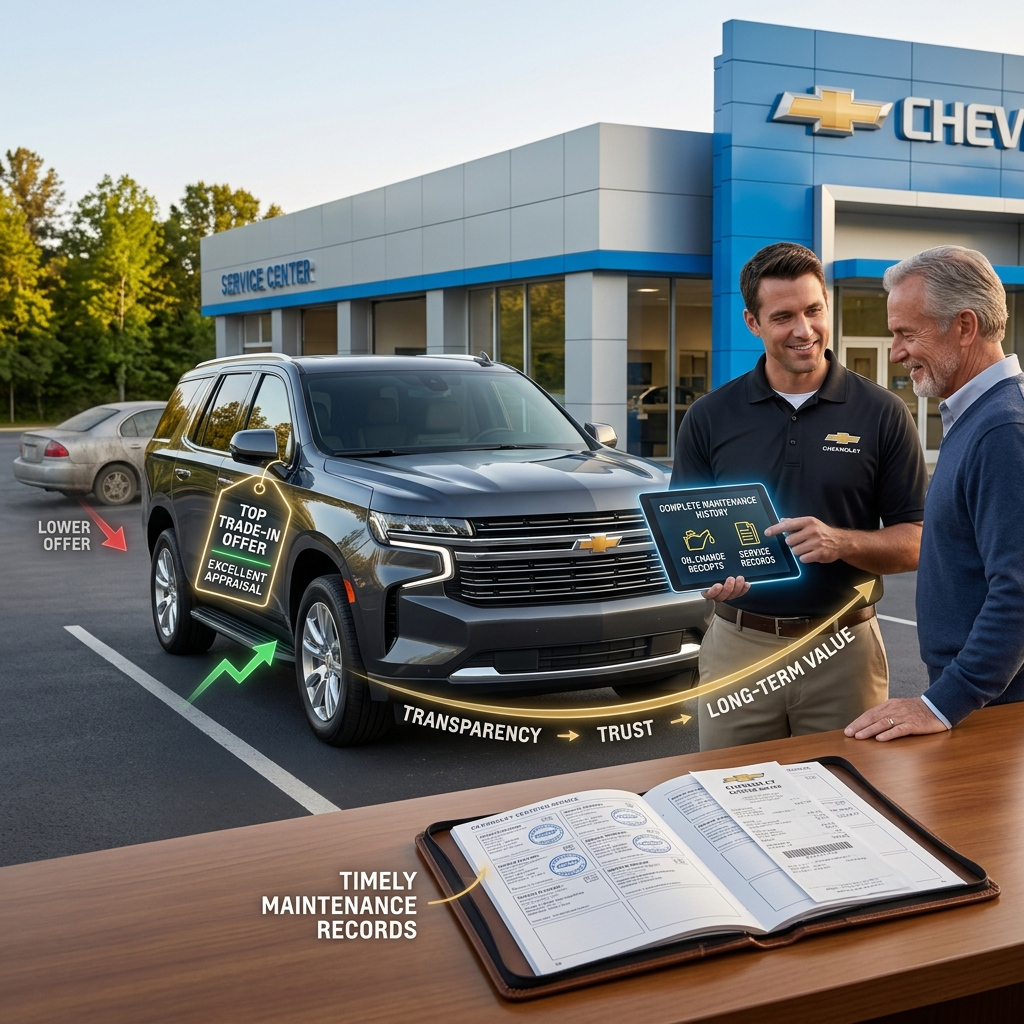
AI generated: Create a polished automotive investment protection image showing a well-maintained vehicle parked outside a modern Chevrolet dealership service center. In the foreground, show a clean folder or tablet displaying organized service records, oil change receipts, and a “complete maintenance history” checklist. Use subtle visual overlays connecting the service records to the vehicle, suggesting trust, transparency, and long-term value. Include a positive trade-in or resale theme: a glowing appraisal tag, rising value arrow, clean vehicle history icons, and a confident buyer or dealer representative reviewing the records. Contrast this subtly with a faded ghosted image of a neglected vehicle with missing records and a lower offer tag in the background. The style should feel premium, trustworthy, and dealership-ready, with warm natural lighting, clean reflections on the vehicle, and professional commercial photography. Keep the focus on the message: documented maintenance protects resale value, builds buyer confidence, and can help your vehicle command a stronger trade-in offer.


Your vehicle is likely one of the largest purchases you will make. Protecting that investment requires a documented history of care. When the time comes to trade in your car or sell it privately, a comprehensive folder of service receipts from a certified dealer like Guntersville Chevrolet is worth its weight in gold. It proves to the next owner that the engine has been shielded from the damage we’ve discussed. A vehicle with a spotty maintenance history is a red flag, often leading to significantly lower offers because the buyer has to assume there is hidden internal wear.

At our dealership, we make it easy to track your history. When you have your oil changed with us, it’s recorded in the vehicle’s permanent service history, which can be seen by future buyers or dealerships. This transparency builds trust and commands a premium price. If you are curious about how your current maintenance habits have impacted your car’s worth, you can Value Your Trade right here on our website. You might be surprised at how much more a well-maintained vehicle is worth compared to one that has missed its service intervals. Don’t let a few missed appointments cost you thousands of dollars in resale value down the road.


Key Indicators Your Car Needs Fresh Oil


Dashboard Warnings: Modern Chevrolets come equipped with an Oil Life Monitoring System (OLMS). This isn’t just a mileage counter; it tracks engine revolutions and temperature to calculate when the oil is actually degraded. If you see the ‘Change Engine Oil Soon’ light, it’s time to listen.


Visual Texture: Check your dipstick monthly. Fresh oil is amber and clear. If it looks like dark chocolate or has a gritty, sandy texture, it is saturated with contaminants and can no longer protect your engine. Milky oil indicates a coolant leak, which requires immediate professional attention.


Unusual Sounds: As oil thins out and lubrication fails, you may hear a ‘ticking’ or ‘knocking’ sound from the engine. This is the sound of metal parts hitting each other without enough cushion. If your engine sounds louder than usual, don’t wait for a light to come on—get it checked immediately.


Choosing the Right Oil: Synthetic vs. Conventional


Not all oils are created equal. The debate between conventional and full synthetic oil is one we often help customers navigate. Conventional oil is refined from crude oil and is suitable for older engines with simpler designs. However, for most modern Chevrolet vehicles, full synthetic is the gold standard. Synthetic oil is engineered in a lab to have uniform molecular structures. This means it flows better in cold temperatures and provides superior protection under high heat. It also contains more robust additive packages that resist sludge formation far longer than conventional options.

While synthetic oil may have a higher upfront cost, it typically allows for longer intervals between changes and provides better protection for the life of the engine. Many new Chevy models, from the fuel-efficient new Chevrolet Trax to the high-performance Corvette, actually require synthetic oil to meet warranty standards. Using conventional oil in an engine designed for synthetic can lead to premature wear and even void your engine warranty. At Guntersville Chevrolet, we use the specific oil grades recommended by General Motors to ensure your vehicle is always running on exactly what its engineers intended.
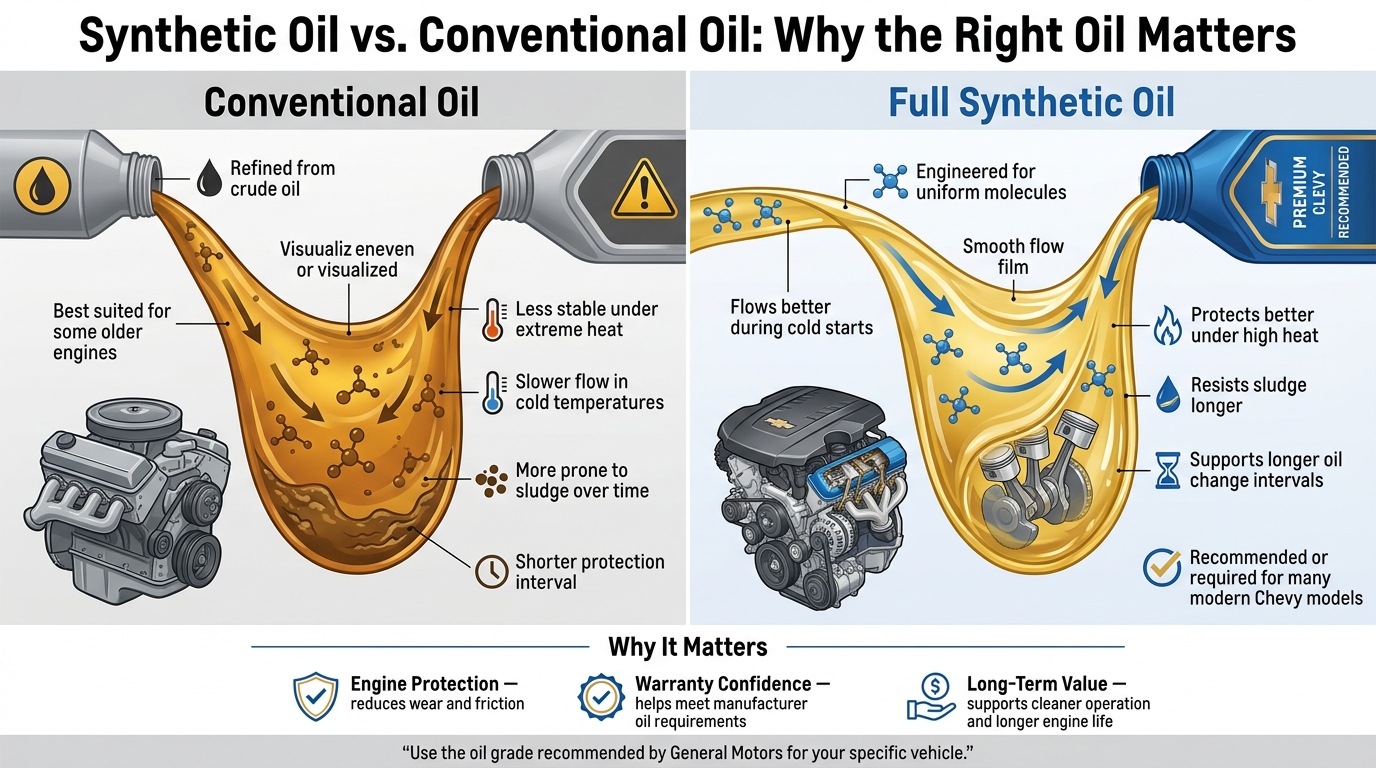
 

AI generated: Use a polished automotive service style with a split-screen layout: Title: “Synthetic Oil vs. Conventional Oil: Why the Right Oil Matters” Left side: Conventional Oil Show darker amber oil with uneven molecule icons, slower flow arrows, mild sludge buildup, and older/simple engine imagery. Use caution-style visuals but keep it professional. Key callouts: * Refined from crude oil * Best suited for some older engines * Less stable under extreme heat * Slower flow in cold temperatures * More prone to sludge over time * Shorter protection interval Right side: Full Synthetic Oil Show clean golden oil with uniform molecule icons, smooth flow arrows, a strong protective film around engine parts, and a modern Chevrolet engine cutaway. Use premium blue/gold highlights to make this side feel advanced and recommended. Key callouts: * Engineered for uniform molecules * Flows better during cold starts * Protects better under high heat * Resists sludge longer * Supports longer oil change intervals * Recommended or required for many modern Chevy models Add a small lower section labeled “Why It Matters” with three icons: 1. Engine Protection — reduces wear and friction 2. Warranty Confidence — helps meet manufacturer oil requirements 3. Long-Term Value — supports cleaner operation and longer engine life Include a subtle dealership trust element at the bottom: “Use the oil grade recommended by General Motors for your specific vehicle.” Style: modern infographic, clean vector-meets-realistic automotive design, crisp icons, readable labels, balanced spacing, premium dealership branding feel, white/gray background with blue and gold accents, high-resolution, professional service-center marketing graphic.

Genuine Chevrolet Parts and Expert Care


Where you get your oil changed matters just as much as how often you do it. While ‘quick lube’ shops are common, they often use generic filters and bulk oil that may not meet the exacting standards of your Chevrolet. A genuine AC Delco oil filter is designed specifically for your engine’s flow rate and filtration needs. It contains more filtering media and better internal valves than generic counterparts, ensuring that contaminants are actually trapped and not just circulated back into the engine. If you’re a DIY enthusiast, you can find these high-quality components at our Parts Ordering Page.

Furthermore, our technicians are GM-certified. This means they don’t just drain the oil; they understand the entire architecture of your vehicle. They know exactly where to look for potential leaks, how to correctly reset your monitoring systems, and which specific fluid updates your model might need. When you bring your car to Guntersville Chevrolet, you are getting the benefit of specialized training that general mechanics simply don’t have. It’s the difference between a basic service and a professional healthcare checkup for your car.


Using OEM parts also ensures that your vehicle’s warranty remains intact. Many aftermarket filters have been known to fail or cause oil pressure drops, which can lead to denied warranty claims if engine damage occurs. We take pride in using only what is best for your Chevy. Beyond the parts, we also offer peace of mind with our View Auto Parts Warranty, ensuring that every component we install is backed by the manufacturer. Whether you need a simple filter or a set of new tires, we treat every part of your vehicle with the same level of professional scrutiny and care.

We also know our customers like to customize their rides. While you’re here for service, feel free to browse our Accessories Ordering Page to find the perfect addition to your vehicle, from all-weather floor mats to performance upgrades. It’s all part of the comprehensive care we provide at Guntersville Chevrolet.


Order Genuine GM Parts

Driving in Guntersville: Local Environmental Factors


The climate and geography of Guntersville, AL, present unique challenges to your engine oil. Our high Alabama humidity is a significant factor. Humidity introduces moisture into the crankcase through the air intake. If you frequently drive short distances—where the engine doesn’t reach full operating temperature for long—this moisture doesn’t have a chance to evaporate. Instead, it mixes with the oil, creating a milky emulsion that promotes rust and acid formation. This is why ‘severe service’ intervals are often more appropriate for local drivers than the standard manufacturer ‘ideal’ interval.

Additionally, our summer heat can be brutal. When temperatures soar, your oil has to work twice as hard to manage engine heat. If you are using your vehicle for towing boats to Lake Guntersville or hauling trailers on US-431, your engine is under high stress. High-stress driving accelerates the breakdown of oil additives. We often recommend more frequent checks for our customers who Shop New Chevrolet Silverado HD models for work or recreation. The local terrain, with its mix of stop-and-go traffic and rolling hills, means your engine is constantly cycling through different load levels, making fresh, high-quality oil your first line of defense against the Alabama elements.


Frequent Questions and Common Oil Myths


The 3,000-Mile Rule: While this was the standard for decades, modern engines and synthetic oils can often go 5,000 to 7,500 miles between changes. However, sticking to the old rule doesn’t hurt and provides extra security for high-mileage or high-stress vehicles.


Thicker is Always Better: Some believe thicker oil protects better in summer. In reality, modern engines have extremely tight tolerances and require specific thin oils (like 0W-20) to reach small passages. Always stick to the grade listed on your oil cap.


Once You Go Synthetic, You Can’t Go Back: This is a myth. You can switch between synthetic and conventional without harming the engine. However, we recommend staying with synthetic for its superior protection and performance benefits.


The Professional Advantage: Multi-Point Inspections
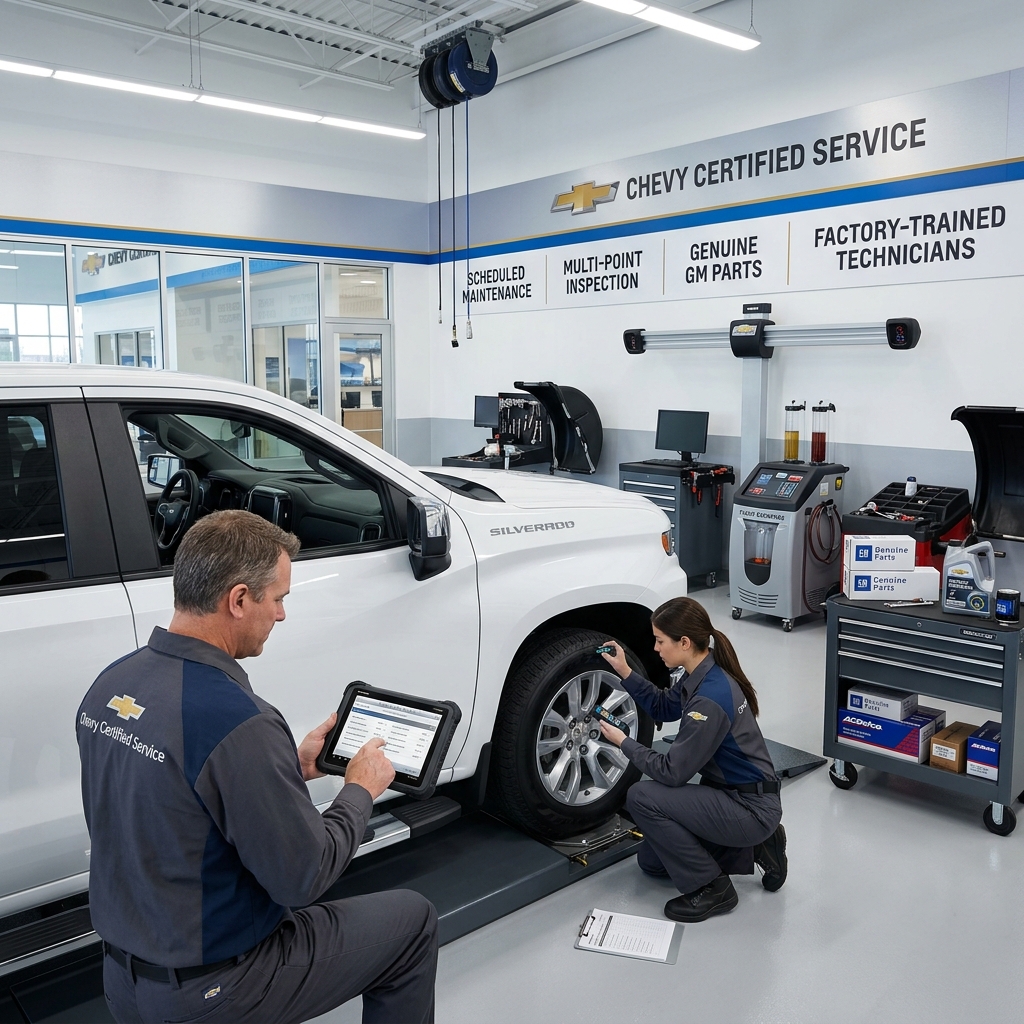
Two technicians inspecting a white Chevy Silverado in a certified service center using digital tools.


At Guntersville Chevrolet, an oil change is never ‘just’ an oil change. Every vehicle that enters our service bay receives a complimentary multi-point inspection. While your oil is draining, our technicians are busy checking your tire tread depth, brake pad thickness, battery health, and fluid levels. We also inspect belts and hoses for signs of wear or cracking. This proactive approach allows us to catch small issues before they become expensive breakdowns on the side of the road.

This comprehensive checkup is part of the ‘Guntersville Advantage.’ We believe in keeping you informed about the total health of your vehicle. For instance, if we notice your tires are wearing unevenly, we can suggest an alignment that saves you from needing to Shop New Tires prematurely. It’s this attention to detail that sets us apart from generic service centers. We want you to drive away with confidence, knowing that your car has been vetted by experts who care about your safety and your vehicle’s longevity.


Long-Term Maintenance Planning for Guntersville Drivers


Successful vehicle ownership is about looking beyond the next 3,000 miles. It’s about creating a long-term maintenance strategy that integrates oil changes with other critical services like transmission flushes, coolant replacements, and brake service. By keeping a consistent schedule at Guntersville Chevrolet, you ensure that your vehicle remains in its peak performance window for its entire life. We also understand that unexpected repairs can happen. That is why we offer resources like our Credit Application to help you manage the costs of keeping your vehicle in top shape.

The Guntersville Advantage is a modern online car shopper built to fit into your busy lifestyle. You can use the Guntersville Advantage from your home computer, tablet, or smartphone and search for your next vehicle from the comfort of your couch. Whether you’re looking for a car, truck, or SUV, the Guntersville Advantage allows you to customize your car-buying journey, with all the steps available whenever and wherever you want. This same philosophy of convenience applies to our service department. If you are looking to Apply for Financing for a major repair or just want to see our View Chevrolet Special Offers, we make the information accessible and easy to understand.


Schedule Your Expert Oil Service at Guntersville Chevrolet


Don’t wait for a warning light or a strange noise to remind you that your engine needs care. The importance of changing your oil cannot be overstated—it is the simplest, most effective way to ensure your Chevrolet remains reliable, efficient, and valuable for years to come. From protecting against friction to maintaining your MPG, every oil change is an investment in your peace of mind. Our team of certified experts is ready to provide the high-quality care your vehicle deserves using genuine parts and industry-leading expertise.

Ready to experience the difference of professional service? You can Service Scheduler right now to find a time that works for you. Whether you’re coming from across town or from a neighboring county, we are committed to providing a transparent, efficient, and friendly experience. Visit us and see why so many Alabama drivers trust us with their most important assets. Check our Hours and Directions and come see us today!