


What Is Included in a Back-to-School Vehicle Safety Inspection?
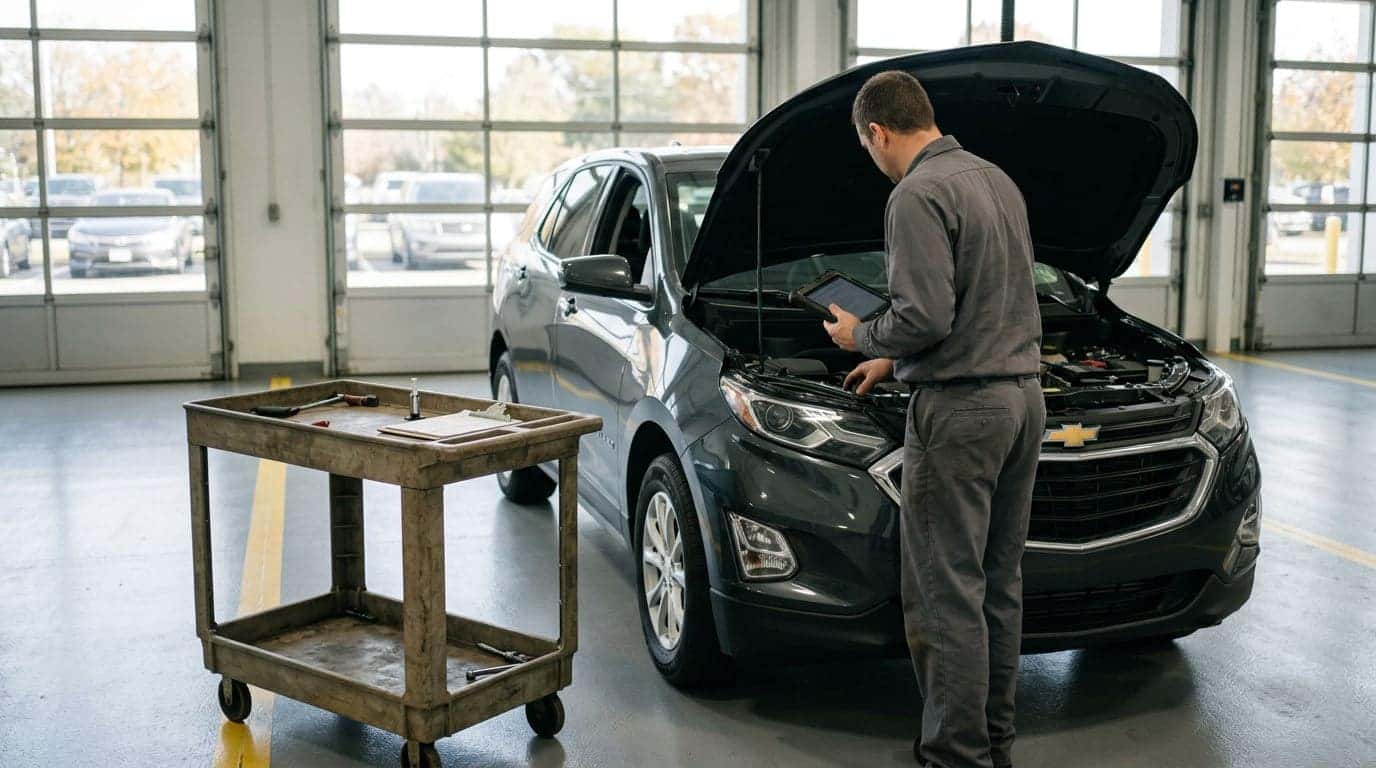
A back-to-school vehicle safety inspection includes a multi-point evaluation of vital operating systems: checking tire tread depth and air pressure, measuring brake pad thickness and rotor condition, testing battery voltage and cranking capacity, inspecting engine fluid levels, evaluating wiper blades and climate control performance, and scanning diagnostic modules for stored fault codes. Certified technicians verify that all exterior lighting, seat belts, and active safety systems operate to factory standards before daily school commutes begin.
A thorough vehicle check typically takes between 30 and 45 minutes to complete. During this process, technicians inspect key safety and mechanical components under the hood, beneath the chassis, and inside the cabin. Families prepping for morning carpool runs often ask our service team about what gets evaluated first during a multi-point inspection. Our certified technicians follow a structured multi-point checklist that categorizes components into green, yellow, and red status levels, giving parents a clear picture of immediate repair needs versus items that can wait until the next service interval.
The inspection covers critical areas designed to keep your family protected during busy morning schedules:
– Braking Systems: Measuring brake pad friction material, inspecting brake lines for leaks, and evaluating rotor surface wear to ensure clean, balanced stopping power.
– Tire Health and Alignment: Checking tire inflation levels against door-jamb specifications, measuring tread depth across all four tires, and identifying irregular wear patterns that indicate steering or suspension misalignment.
– Under-Hood Fluids: Verifying the level and cleanliness of engine oil, engine coolant, brake fluid, power steering fluid, and windshield washer fluid.
– Electrical and Battery Systems: Conducting a conductance test on the 12-volt battery, testing alternator output, inspecting battery terminal corrosion, and checking all exterior signal lights and headlights.
– Visibility and Cabin Comfort: Inspecting windshield wiper rubber for tearing, checking washer fluid spray nozzles, and testing HVAC defroster and heating performance.
Before driving out for the first bell of the semester, bringing your SUV or truck in for a scheduled checkup provides complete confidence on the road. You can bring your vehicle to our service department at 11982 US, Suite C in Guntersville or reach out to (256) 578-9170 to consult with our service advisors about setting up an appointment.
Table of Contents
- How Much Does a Chevrolet Back-to-School Inspection Cost?
- Why Is Testing the Battery and Checking Tire Tread Essential Before School Starts?
- How Often Should Chevrolet Fluid Levels and Brake Systems Be Inspected?
- What Are the Advantages of Dealership Service Versus Quick Lube Shops?
- Why Is Factory Diagnostic Software Essential for Modern 2027 Chevrolet Vehicles?
- Are Genuine GM OEM Parts Better Than Aftermarket Components for Your Family SUV?
- Essential Questions About Chevrolet Back-to-School Maintenance
- Preparing Your Chevrolet for the Academic Year Ahead
How Much Does a Chevrolet Back-to-School Inspection Cost?
A standalone Chevrolet multi-point vehicle inspection ranges from complimentary up to $50, and is frequently included at no additional charge when paired with routine scheduled maintenance such as an oil change or tire rotation.
Investing in regular multi-point inspections helps prevent costly emergency repairs while preserving the safety and long-term resale value of your vehicle. For families managing multi-passenger vehicles like the 2026 Chevrolet Traverse, routine inspection schedules align with standard service intervals. The 2026 Traverse lineup starts with the FWD LT trim at a base MSRP of $40,800, while the AWD LT carries a base MSRP of $42,800. Stepping up to specialized trims, the AWD Z71 begins at $48,900, the FWD High Country starts at $55,100, and the FWD RS is $55,400. Top-tier configurations include the AWD High Country at $57,100 and the AWD RS at $57,400, each subject to a $1,995 destination charge.
Maintaining factory inspection schedules protects long-term value across both new family models and our pre-owned inventory. Combining your back-to-school safety check with routine oil service optimizes shop time so you can get back to your daily schedule without unnecessary delays. Parents can reserve an appointment time in advance through our online service scheduling form to ensure prompt attention upon arrival.
Pricing
Pricing by trim
| Feature | AWD High Country | AWD LT | AWD RS | AWD Z71 |
|---|---|---|---|---|
| Base MSRP | $57,100 | $42,800 | $57,400 | $48,900 |
| Destination charge | $1,995 | $1,995 | $1,995 | $1,995 |
Pricing (continued)
| Feature | FWD High Country | FWD LT | FWD RS |
|---|---|---|---|
| Base MSRP | $55,100 | $40,800 | $55,400 |
| Destination charge | $1,995 | $1,995 | $1,995 |
Engine & Performance
Powertrain specs by trim
| Feature | AWD High Country | AWD LT | AWD RS | AWD Z71 |
|---|---|---|---|---|
| Engine | 2.5L | 2.5L | 2.5L | 2.5L |
| Horsepower | 328 hp | 328 hp | 328 hp | 328 hp |
| Torque | 326 lb-ft | 326 lb-ft | 326 lb-ft | 326 lb-ft |
| Transmission | automatic 8-speed | automatic 8-speed | automatic 8-speed | automatic 8-speed |
| Drivetrain | All-wheel drive | All-wheel drive | All-wheel drive | All-wheel drive |
Engine & Performance (continued)
| Feature | FWD High Country | FWD LT | FWD RS |
|---|---|---|---|
| Engine | 2.5L | 2.5L | 2.5L |
| Horsepower | 328 hp | 328 hp | 328 hp |
| Torque | 326 lb-ft | 326 lb-ft | 326 lb-ft |
| Transmission | automatic 8-speed | automatic 8-speed | automatic 8-speed |
| Drivetrain | Front-wheel drive | Front-wheel drive | Front-wheel drive |
Why Is Testing the Battery and Checking Tire Tread Essential Before School Starts?
Testing the battery and checking tire tread before the academic year starts prevents sudden starting failures during morning drop-offs and maintains wet-weather traction during unpredictable autumn rainfall.
Summer heat is the primary cause of internal battery degradation. High ambient temperatures cause internal battery fluids to evaporate and accelerate corrosion on lead plates inside the casing. While a weak battery may start an engine without issue during hot July afternoons, the initial cool mornings of early autumn demand higher cranking power to turn over the engine. A battery conductance test measures cold cranking amps and voltage delivery, identifying dying cells before they leave your vehicle immobilized in the driveway.
Tire tread depth is equally critical when navigating morning school traffic during seasonal rainstorms. New tires feature 10/32 inches or more of tread depth, designed to channel standing water away from the contact patch. The key tire wear thresholds to keep in mind include:
– 4/32 Inches: The recommended minimum tread depth for driving on wet pavement. Below this level, stopping distances increase significantly and hydroplaning risk rises.
– 2/32 Inches: The legal minimum tread limit. At this stage, tires lose structural grip on wet roads and require immediate replacement.
Navigating the rolling terrain and lakeside roads around Guntersville requires reliable tire grip, especially when sudden rain showers make asphalt slick. Certified technicians use precision tread depth gauges across the inner, center, and outer grooves of each tire to ensure balanced wear and maximum safety. If tread depth is getting low, evaluating your options early gives you time to choose the ideal replacement tires or consider whether it makes sense to value your trade online toward an updated model.
Fuel Economy
Fuel economy and range by trim
| Feature | AWD High Country | AWD LT | AWD RS | AWD Z71 |
|---|---|---|---|---|
| MPG | 20 city / 24 hwy / 21 combined | 20 city / 24 hwy / 21 combined | 20 city / 24 hwy / 21 combined | 20 city / 24 hwy / 21 combined |
Fuel Economy (continued)
| Feature | FWD High Country | FWD LT | FWD RS |
|---|---|---|---|
| MPG | 20 city / 26 hwy / 22 combined | 20 city / 26 hwy / 22 combined | 20 city / 26 hwy / 22 combined |
How Often Should Chevrolet Fluid Levels and Brake Systems Be Inspected?
Chevrolet recommends inspecting brake pad thickness, brake fluid quality, and essential engine fluids during every routine oil change interval or at least once every 7,500 miles.
Brake components experience steady mechanical wear from daily stop-and-go driving. Disc brake pads utilize friction material that wears down over time. When brake pad thickness drops below 3/32 inches, stopping distance increases and metal components risk making contact with brake rotors. Certified technicians measure brake pad friction material on both inner and outer pads across front and rear axles to ensure even wear.
Watch for these warning signs that indicate your braking system needs immediate attention:
– Audible Grinding or Squeal: Squealing indicates that internal wear sensors have made contact with the rotor, while grinding means the friction material is fully depleted.
– Steering Wheel Vibration: Pulsation through the brake pedal or steering wheel during deceleration often points to warped brake rotors or uneven pad deposits.
– Soft or Spongy Brake Pedal: A pedal that feels soft or sinks toward the floorboard suggests air in the hydraulic lines, leaking fluid, or degraded brake fluid containing moisture.
Daily stop-and-go commuting across the Sand Mountain plateau near Albertville puts consistent demands on braking systems and transmission cooling fluids. In addition to brakes, technicians verify fluid levels for the engine, transmission, and cooling systems. Keeping these systems properly maintained preserves performance across our certified pre-owned Chevrolet inventory as well. Drivers interested in trading up can easily complete an online credit application to review current purchasing options.
What Are the Advantages of Dealership Service Versus Quick Lube Shops?
Dealership service delivers factory-trained technicians with thousands of hours of brand-specific experience, specialized GM diagnostic tooling, and Genuine GM OEM parts backed by manufacturer warranties.
Independent quick lube centers rely on broad, non-specific service procedures and low-cost aftermarket components designed to fit multiple vehicle makes. In contrast, Chevrolet certified service departments utilize technicians who specialize exclusively in GM architecture. These technicians complete extensive factory training modules and utilize specialized tools designed specifically for your model year, ensuring every maintenance procedure matches original factory specifications.
Key differences between dealership service and independent repair facilities include:
– Specialized Diagnostic Equipment: Certified service lanes utilize factory software capable of communicating directly with GM electronic control modules for precise system diagnostics.
– Original Equipment Components: Dealerships install Genuine GM OEM Parts and ACDelco components designed for exact fitment and structural durability.
– Warranty and Recall Tracking: Every service visit includes an automatic check of open recall campaigns and manufacturer warranty coverage, ensuring required updates are completed promptly.
– Comprehensive Vehicle Knowledge: From compact SUVs like the 2026 Chevrolet Equinox with its 1.5L engine, CVT, and 26 city / 29 hwy mpg rating to full-size models like the 2026 Chevrolet Tahoe featuring a 5.3L V8 engine and 6,600 lbs towing capacity, factory techs understand exact fluid specs and torque values.
Choosing factory-backed care ensures that every service procedure supports vehicle longevity across our new Chevrolet lineup. Owners looking to customize their vehicle can also browse the official Chevrolet accessories catalog for floor liners, roof racks, and cargo organizers designed specifically for family drop-off duties.
Why Is Factory Diagnostic Software Essential for Modern 2027 Chevrolet Vehicles?
Factory diagnostic software is essential for 2027 Chevrolet vehicles because modern powertrains, safety arrays, and infotainment networks rely on proprietary software architecture that requires official GM diagnostic tools for module recalibration, sensor alignment, and control updates.
Vehicle architecture in modern models integrates dozens of interconnected microprocessors managing everything from engine combustion timing to active lane safety systems. When a vehicle undergoes routine maintenance or component replacement, these electronic control modules often require software re-flashing or sensor zero-point calibrations. Generic scan tools used by third-party facilities can read basic trouble codes, but they lack the proprietary software access required to perform deep module updates or recalibrate complex safety systems.
Utilizing factory-level diagnostic software provides specific operational advantages:
– Precision ADAS Calibration: Front-facing cameras, radar units, and blind-zone sensors require exact pixel and distance recalibrations following windshield replacement, wheel alignment, or front-end service.
– Control Module Flashing: Factory diagnostic tools download software updates directly from GM servers to address driveability bulletins, refine shifting performance, and update infotainment operating systems.
– In-Depth Fault Analysis: Advanced diagnostic software pinpoints intermittent electrical faults, sensor voltage deviations, and bus communication errors before physical component failure occurs.
– System Synchronization: Replacement modules for anti-lock braking, electronic power steering, and active fuel management require digital handshakes with the primary body control module to operate correctly.
Relying on authorized factory software ensures that your vehicle’s safety features and powertrain algorithms operate exactly as engineered by the manufacturer.
Are Genuine GM OEM Parts Better Than Aftermarket Components for Your Family SUV?
Genuine GM OEM parts are superior to aftermarket components because they are engineered and crash-tested to match exact factory dimensions, material specifications, and structural tolerances while maintaining comprehensive GM warranty protection.
Aftermarket manufacturers design generic replacement parts to fit a wide variety of makes and models, leading to compromises in material thickness, fitment precision, and component durability. Genuine GM OEM Parts and ACDelco components are built to the exact specifications as the parts installed on the assembly line. Whether replacing brake pads, cabin air filters, or suspension struts, OEM components ensure original performance, proper acoustic dampening, and full structural integrity during severe impacts. Furthermore, genuine parts carry manufacturer warranty coverage that covers both the component and labor when installed by an authorized service department.
You can order original components directly through our online GM parts portal. For professional installation by certified technicians, visit our service lane at 11982 US, Suite C in Guntersville or call our team at (256) 578-9170 to speak with a parts specialist.
Essential Questions About Chevrolet Back-to-School Maintenance
Q: How long does a multi-point vehicle inspection take at a Chevrolet dealership?
A: A standard Chevrolet multi-point vehicle inspection takes between 30 and 45 minutes. If additional routine maintenance like an oil change or tire rotation is performed during the same visit, total service duration typically ranges from 60 to 90 minutes. Certified technicians systematically inspect under-hood fluids, underbody structural components, tire wear, and braking systems to complete the check efficiently while maintaining thorough accuracy.
Q: What tire tread depth is necessary for safe wet-weather driving during autumn?
A: Tires should maintain at least 4/32 inches of tread depth for safe braking and hydroplaning resistance on wet roads during autumn school runs. While 2/32 inches represents the legal minimum limit, tires worn to that point exhibit significantly increased stopping distances on rain-slicked pavement. Replacing tires before reaching the minimum limit ensures proper road contact and predictable handling during rainy morning commutes.
Q: Does Chevrolet Roadside Assistance cover unexpected breakdowns during school drop-offs?
A: Yes, official Chevrolet Roadside Assistance provides 24/7 emergency coverage during breakdowns, flat tires, dead batteries, or lockout situations. Vehicle owners can reach dedicated emergency support directly at Chevrolet Roadside Assistance: 1-800-243-8872. Coverage includes towing to the nearest authorized dealership service department, flat tire changes, battery jump-starts, and fuel delivery backed by factory-certified support personnel.
Q: How does summer heat affect car battery performance entering the school year?
A: High summer temperatures accelerate internal chemical reactions and liquid evaporation inside 12-volt car batteries, causing internal plate corrosion and grid degradation. While a weakened battery may function adequately during warm weather, the initial chilly autumn mornings increase the mechanical resistance needed to crank the engine, leading to sudden battery failure. Testing voltage and cold cranking capacity late in summer identifies dying cells before cold starts cause a morning delay.
Q: What should parents check at home before scheduling a professional service appointment?
A: Parents can conduct a quick visual pre-inspection at home by checking windshield wiper blade rubber for tears, testing exterior headlights and brake lights with a helper, monitoring tire pressure via the driver-side door jamb decal, and looking for dashboard warning lights. Identifying these basic items helps prioritize service requests when bringing the vehicle in for a comprehensive multi-point inspection.
Preparing Your Chevrolet for the Academic Year Ahead
Ensuring vehicle reliability before school routines start eliminates unexpected morning breakdowns and preserves family safety across every mile. Taking a proactive approach to routine maintenance, tire health, and brake performance keeps your SUV or truck running smoothly throughout the busy fall season. Schedule your back-to-school service appointment with our certified technicians today through our online service scheduler or call our service department at (256) 578-9170 to keep your Chevrolet performing at its best.
0 comment(s) so far on What Is Included in a Back-to-School Vehicle Safety Inspection?