


A Vehicle for the Big Kids: The Enduring Legacy of the Chevy Tahoe
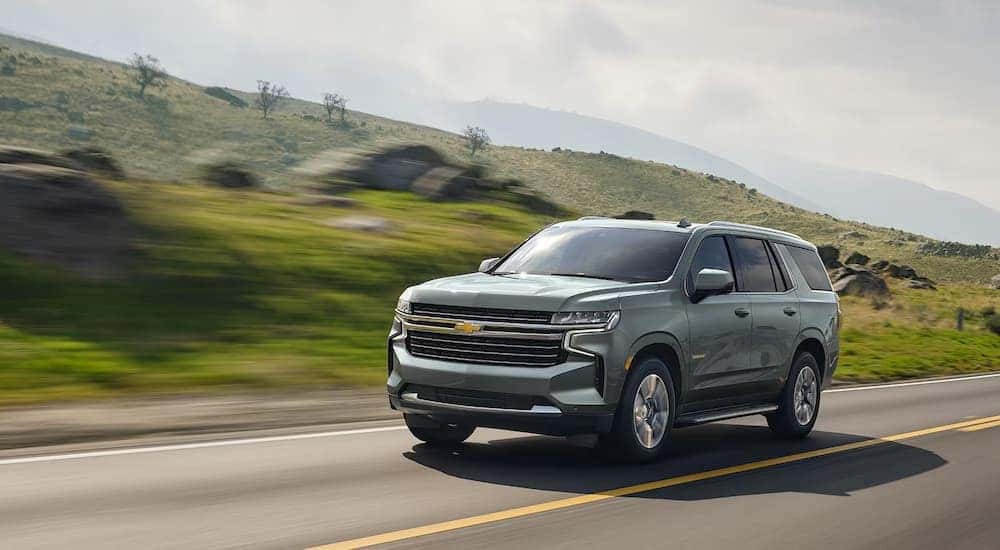
With each model year, the number of SUVs that are available for purchase continues to grow with no end in sight. Many manufacturers have turned to the further implementation of more subcompact and scaled-down models to appeal to drivers who might not like the idea of having something of a larger-than-average size to drive. While this has been good for some, it’s not the ideal solution for everybody. This is particularly true for drivers—family-oriented and otherwise—who still need the classic setup of three rows of seating, plenty of storage space, and a powerful engine to propel it forward. Luckily, these options still exist—most notably in the 2024 Chevy Tahoe. One of the most respected SUVs in Chevy’s lineup, the Tahoe has been a standard bearer of the bow-tie brand for almost 30 years. But how exactly did it reach this state of prestige and performance?
Humble Beginnings and a Notable Sibling 1991–1999
The legacy of the Chevy Tahoe doesn’t begin with Chevy but its GM counterpart, GMC. In 1991, the first hints of the modern SUV boom began to take hold of the vehicle-buying public. Introduced in 1991 for the 1992 model year was the GMC Yukon. A two-door SUV that took the place of the GMC Jimmy, this was the start of what the Tahoe would become. At the time, Chevy retained the Blazer name for its variation of the Jimmy and would do so until the 1995 model year. Newly rechristened the Tahoe, this was where the legacy of the vehicle truly began.
The year 1995 was also notable for the addition of a four-door model to the lineup. Evolution tends to move at a slow and straightforward pace, but the Tahoe didn’t take very long to make an impression on not only drivers but on industry experts, as well. The Tahoe was named Truck of The Year by MotorTrend magazine in 1996.
The team behind the Tahoe spared no effort when they developed its powertrain. In 1995, the first Tahoe carried over the same engine from the Blazer—a 5.7L small-block V8 that produced 200 hp and generated 310 lb-ft of torque. The following year saw a notable improvement, as the Tahoe was equipped with an updated version of the engine that increased performance, with 250 hp and an additional 45 lb-ft of torque. Chevy’s role in sustaining diesel as a viable energy source for performance was further cemented with an available diesel engine on two-door versions of the Tahoe with 4WD. Its capacity to generate 360 lb-ft of torque was the first sign of what GM would accomplish with its Duramax diesel engine a few years later. By the time the final year of its first generation came to a close in 1999, the Chevy Tahoe had already sold over 250,000 units in North America, proving its popularity and performance went hand in hand.
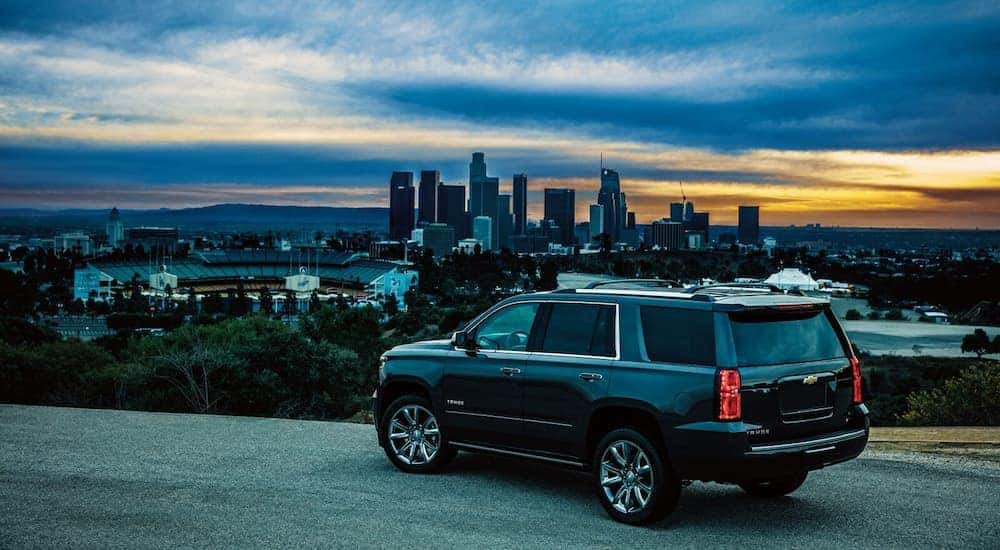
A New Century Dawns and the Second Generation Begins 2000–2007
As the 21st century officially got underway, it was apparent that GM had designs on becoming the dominant brand of the SUV boom that had begun to take center stage in the auto industry. The previous year had witnessed the debut of the Chevy Silverado 1500, a pickup truck that immediately competed against its main competitor, Ford, and its F-150. In the years that followed, the Silverado 1500 would become Chevy’s flagship product and continues to impress to this day. The Tahoe underwent a notable design change during the beginning of the next generation, becoming an exclusively four-door model. The new platform on which the vehicle was built was still utilized for the GMC Yukon, but two other notable vehicles from the time period would share it as well—the Cadillac Escalade and Hummer H2, two vehicles that would become identifiable as status symbols in the early 2000s.
There were some notable changes to the Tahoe at this time, including the inclusion of OnStar-connected services and an available nine-speaker stereo system. Further technological changes were implemented by 2003, such as the start of a partnership with Bose Audio—which continues to this day—and accessibility to XM satellite radio. The diesel powertrain would be absent during the second generation of the Tahoe, but a new 5.3L V8 was introduced with a new technology known as Flex-Fuel. By limiting the engine’s output to situations that needed it, the Tahoe put less stress on it and increased its fuel economy.
Fresh Look, New Style, and a Continued Commitment to Excellence 2007–2020
By the time the third generation of the Chevy Tahoe arrived in 2005, there was a notable change in the SUV market. There was more demand for smaller SUVs, and the old design philosophy of “bigger is better” had begun to take a back seat to scaled-down models that were more convenient for drivers to drive. Both the Tahoe and the Yukon were given brand-new front-end designs, and for a brief period, a hybrid powertrain was offered from 2008 to 2013. However, a new development in 2014, at the beginning of the vehicle’s next generation, would show that Chevy was willing to take the full-sized SUV in new directions. The announcement of the Z71 Tahoe, specifically built for off-road adventures, rekindled public interest in the vehicle. With its 20-inch wheels and skid plates designed for added protection, it was clear that Chevy was willing to offer more power to off-roaders than ever before. This was further benefitted by a shift in design change that would see the Tahoe and Yukon built on the Silverado and Sierra 1500 chassis, making them more capable than in previous years. By 2016, the Tahoe was now equipped with Apple and Android compatibility, bringing the vehicle into the digital age.

The Tahoe Train Keeps Rolling 2021–Present
The current generation of the Chevy Tahoe is a masterclass in what a full-sized SUV can accomplish. Aside from a perennially inspirational design, the 3.0L Duramax diesel engine is now an available powertrain, along with the same two V8 engines that have been present in the Tahoe since its formative years. The Z71 trim continues to offer drivers a means to take their adventures off-road, and upper-tier trims offer more luxurious features than ever before. Perhaps the most significant leap forward for the Chevy Tahoe in recent years has been the availability of SuperCruise. GM’s hand-free driving assistance feature now minimizes driver fatigue on long trips. Some of the planned improvements for the Tahoe include an updated infotainment screen for 2025 and an increased performance rating on the diesel-fueled powertrain. No matter where the Tahoe goes from here, we’re all eager to come along for the ride.
Experience the Excellence of the Tahoe First-Hand at Guntersville Chevrolet
The journey that the Chevy Tahoe has taken is an intriguing and exciting one. From its humble beginnings in the early 1990s, maintaining its prominence during the SUV boom, and continuing to offer drivers all the features they ask for, it’s no wonder why we’re still admiring this vehicle many years later. You can make yourself a part of the Tahoe’s impressive legacy by taking a trip to Guntersville Chevrolet. We have the Tahoe, Suburban, and a vast array of new and used vehicles from across the Chevy fleet. Whether you’re in the market for a new vehicle, looking to see what financing options are available, or just need some routine service performed, we want to see you and use our expertise to lend a helping hand.
0 comment(s) so far on A Vehicle for the Big Kids: The Enduring Legacy of the Chevy Tahoe