


What Is the Estimated Driving Range of the 2027 Chevrolet Bolt Compared to the 2026 Hyundai Kona Electric?
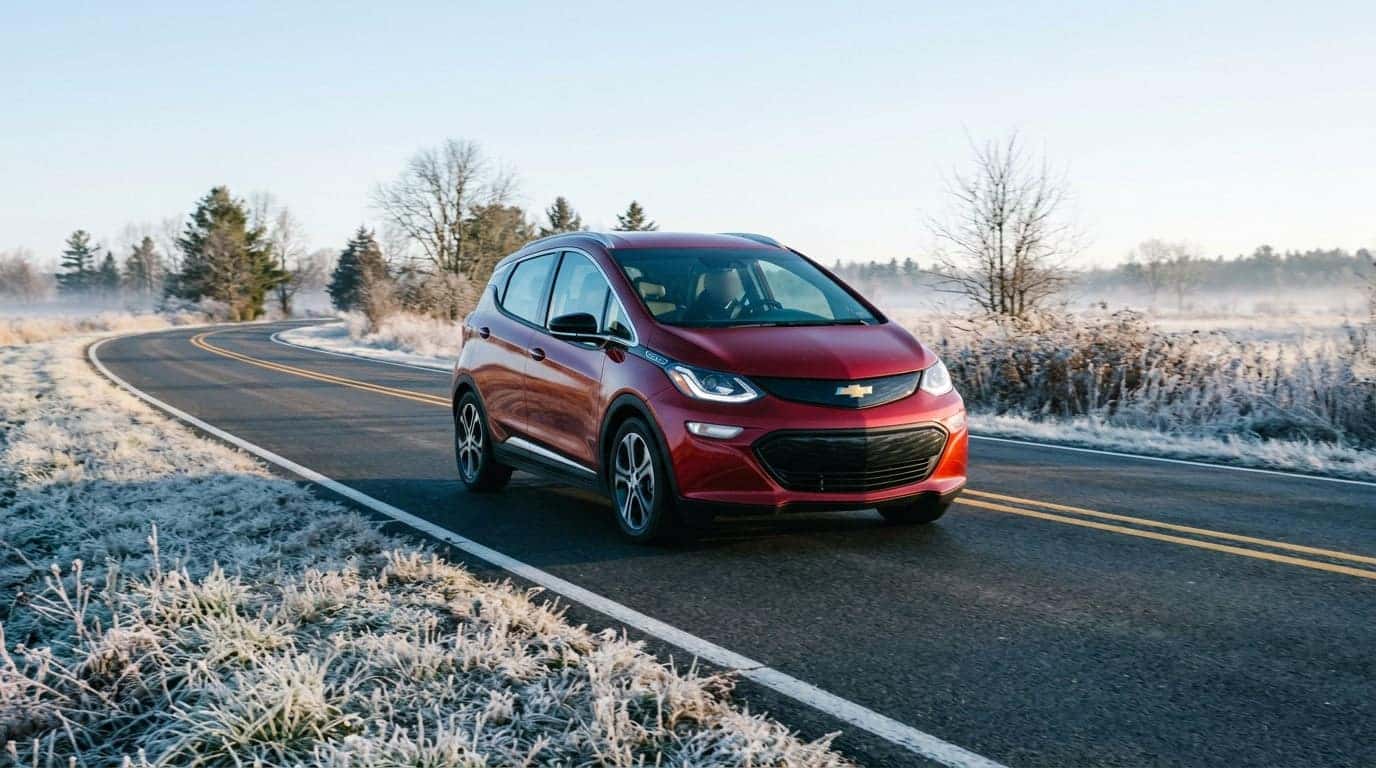
The 2027 Chevrolet Bolt delivers an EPA-estimated driving range of 262 miles on a full charge with its standard 65-kWh battery pack. By comparison, the 2026 Hyundai Kona Electric provides an EPA-estimated range of 200 miles on its standard 48.6-kWh battery pack and up to 261 miles when equipped with its larger 64.8-kWh extended-range battery. Across standard trim levels, the 2027 Chevrolet Bolt offers a 62-mile range advantage over the entry-level Kona Electric while providing slightly higher maximum range overall.
┌────────────────────────────────────────────────────────────────────────────────────────┐
│                        EPA-ESTIMATED DRIVING RANGE COMPARISON                          │
├───────────────────────────────────┬────────────────────────────────────────────────────┤
│ 2027 Chevrolet Bolt (65 kWh)      │ 262 Miles Standard                                 │
├───────────────────────────────────┼────────────────────────────────────────────────────┤
│ 2026 Kona Electric Base (48.6 kWh)│ 200 Miles Standard                                 │
├───────────────────────────────────┼────────────────────────────────────────────────────┤
│ 2026 Kona Electric Long (64.8 kWh)│ 261 Miles Available                                │
└───────────────────────────────────┴────────────────────────────────────────────────────┘
Battery capacity and energy density explain the core difference in daily capability between these two compact electric crossovers. Chevrolet equips every 2027 Bolt with a advanced 65-kWh lithium-iron-phosphate (LFP) battery pack built on General Motors’ Ultium platform. This chemistry offers excellent thermal durability, consistent daily charging tolerance, and standard efficiency rated at 134 MPGe city / 106 MPGe highway.
The 2026 Hyundai Kona Electric splits its lineup between two distinct battery sizes. The entry-level Kona Electric SE uses a smaller 48.6-kWh lithium-ion pack engineered primarily for shorter urban commutes. Upgrading to the Kona Electric SEL or Limited trim brings the 64.8-kWh pack, which reaches 261 miles of range — matching the baseline capability that Chevrolet provides as standard equipment on the Bolt.
For drivers navigating the elevation changes of the Sand Mountain plateau near Albertville, having 262 miles of standard range ensures extra reserve capacity for daily errands and highway driving without requiring high-trim battery upgrades. Commuters gain consistent performance without paying a premium for long-range battery options.
To explore electric driving options or plan a visit to our showroom, drivers can find our Guntersville showroom location directly on Highway 431, or give our sales team a quick call at (256) 578-9170 for direct assistance.
Table of Contents
- How Do Performance and Horsepower Ratings Compare Between the Bolt and Kona Electric?
- What Is the Starting Price Difference Between the 2027 Chevrolet Bolt and 2026 Hyundai Kona Electric?
- Which EV Is Better Suited for Long-Distance Highway Road Trips and Fast Charging?
- How Do Cold Weather Temperatures Impact Range and Battery Performance for These EVs?
- What Are the Maintenance Requirements, Federal Tax Credit Rules, and Reliability Expectations?
- Frequently Asked Questions About the 2027 Chevy Bolt and 2026 Hyundai Kona Electric
- Take the Next Step Toward Your Electric Drive at Guntersville Chevrolet
How Do Performance and Horsepower Ratings Compare Between the Bolt and Kona Electric?
The 2027 Chevrolet Bolt generates 210 hp and 169 lb-ft of torque across all trim configurations through its front single-motor drive unit. The 2026 Hyundai Kona Electric produces 133 horsepower in its base SE model and steps up to 201 horsepower in SEL and Limited trims. Consequently, the standard 2027 Chevrolet Bolt delivers 77 more horsepower than the entry-level Kona Electric and maintains a 9-horsepower output lead over Hyundai’s upper-tier models.
Acceleration and power delivery in the 2027 Chevrolet Bolt rely on a single-speed automatic 1-speed transmission mated to a Front-wheel drive layout. The electric motor delivers instant torque from a complete stop, making highway merging, passing, and steep grade climbing responsive and direct. Drivers can select between two main configurations: the practical LT Auto and the sporty RS Auto, both sharing the identical 210 hp propulsion system.
Hyundai spreads its performance capabilities across different motor specifications:
- Kona Electric SE: 133 horsepower front-mounted electric motor with immediate low-speed response.
- Kona Electric SEL: 201 horsepower front motor engineered for balanced highway merging power.
- Kona Electric Limited: 201 horsepower front motor paired with upgraded comfort amenities.
Both vehicles utilize front-wheel drive to optimize efficiency and front-tire traction during rain or adverse weather. The Bolt’s standard 210 hp setup ensures that buyers do not need to pay extra for a higher trim level simply to receive adequate highway passing power.
Shoppers ready to compare trim features and test out instant electric power can check our new 2027 Chevrolet Bolt inventory to review incoming vehicles. To customize utility and interior storage, vehicle owners can browse our official Chevrolet accessories portal for cargo organizers, custom floor mats, and protective equipment.
Engine & Performance
Powertrain specs by trim
| Feature | LT Auto | RS Auto |
|---|---|---|
| Horsepower | 210 hp | 210 hp |
| Torque | 169 lb-ft | 169 lb-ft |
| Transmission | automatic 1-speed | automatic 1-speed |
| Drivetrain | Front-wheel drive | Front-wheel drive |
What Is the Starting Price Difference Between the 2027 Chevrolet Bolt and 2026 Hyundai Kona Electric?
The 2027 Chevrolet Bolt features a starting base MSRP of $27,600 for the LT Auto trim, with a $1,395 destination charge bringing the total starting entry price to $28,995. The 2026 Hyundai Kona Electric starts at an estimated base MSRP of approximately $34,000 for its standard-range SE model. This establishes a starting price gap of roughly $5,000 to $6,000 in favor of the Chevrolet Bolt.
┌────────────────────────────────────────────────────────────────────────────────────────┐
│                        STARTING MSRP AND DESTINATION BREAKDOWN                         │
├───────────────────────────────────┬────────────────────────────────────────────────────┤
│ 2027 Chevrolet Bolt LT Auto       │ $27,600 Base MSRP + $1,395 Destination             │
├───────────────────────────────────┼────────────────────────────────────────────────────┤
│ 2027 Chevrolet Bolt RS Auto       │ $31,600 Base MSRP + $1,395 Destination             │
├───────────────────────────────────┼────────────────────────────────────────────────────┤
│ 2026 Hyundai Kona Electric SE     │ ~$34,000 Base MSRP (Estimated)                     │
└───────────────────────────────────┴────────────────────────────────────────────────────┘
Price positioning highlights the value structure of General Motors’ updated electric lineup. Chevrolet offers two streamlined trim options for the Bolt:
- LT Auto: Starting base MSRP of $27,600 before the $1,395 destination charge, including standard 262-mile range, 210 hp, and native charging technology.
- RS Auto: Starting base MSRP of $31,600 before destination freight, adding bold exterior styling accents, upgraded interior finishes, and sport-themed interior touches.
Hyundai positions the Kona Electric at a higher initial price point. To match the Bolt’s standard 260-plus mile driving range, a Kona Electric buyer must step up from the base SE to the SEL trim, pushing the required purchase price further upward into the mid-$30,000 range.
For budget-conscious shoppers evaluating total vehicle expenditure, the Bolt provides long-range capability, modern infotainment, and energetic power well below the typical price floor of competing compact electric crossovers. Shoppers who prefer to evaluate pre-owned options alongside new models can also view our pre-owned vehicle inventory to evaluate current market pricing across various powertrains.
Pricing
Pricing by trim
| Feature | LT Auto | RS Auto |
|---|---|---|
| Base MSRP | $27,600 | $31,600 |
| Destination charge | $1,395 | $1,395 |
Which EV Is Better Suited for Long-Distance Highway Road Trips and Fast Charging?
The 2027 Chevrolet Bolt is better equipped for highway road trips due to its peak DC fast-charging rate of 150 kW and native North American Charging Standard (NACS) charging port. The 2026 Hyundai Kona Electric peaks at approximately 100 kW during DC fast charging and uses a traditional CCS1 port, requiring an adapter to connect to Tesla Supercharger stations.
Fast-charging performance directly impacts total travel time on multi-state journeys. Connected to a compatible 150 kW or higher DC fast charger, the 2027 Chevrolet Bolt replenishes its battery from 10% to 80% capacity in approximately 25 minutes under optimal temperature conditions. The Kona Electric requires roughly 43 minutes to complete a 10% to 80% charge at its maximum 100 kW charge acceptance speed. Over a long highway journey requiring multiple charge stops, those 18-minute savings per session significantly shorten total trip duration.
┌────────────────────────────────────────────────────────────────────────────────────────┐
│                        DC FAST-CHARGING SPEED AND CONNECTOR COMPARISON                 │
├───────────────────────────────────┬────────────────────────────────────────────────────┤
│ 2027 Chevrolet Bolt               │ 150 kW Peak Speed | Native NACS Port (25 Min 10-80%)│
├───────────────────────────────────┼────────────────────────────────────────────────────┤
│ 2026 Hyundai Kona Electric        │ 100 kW Peak Speed | CCS1 Port (43 Min 10-80%)      │
└───────────────────────────────────┴────────────────────────────────────────────────────┘
Port compatibility represents another major road-trip advantage. By integrating a native NACS port directly into the rear quarter panel, the 2027 Chevrolet Bolt connects directly to the Tesla Supercharger network without requiring external plastic adapters or secondary locking mechanisms. Drivers simply pull up, plug in, and initiate charging.
Long-distance highway driving along the Coosa River corridor near Rainbow City highlights the practical benefit of faster charge replenishment and expanded station access. Highway travelers spend less time stationary at public charging plazas and more time moving toward their destinations.
Shoppers interested in factory-backed reconditioned models can explore our certified pre-owned inventory to learn more about GM inspection standards and extended warranty protections.
Fuel Economy
Fuel economy and range by trim
| Feature | LT Auto | RS Auto |
|---|---|---|
| MPG | 134 city / 106 hwy / 120 combined | 134 city / 106 hwy / 120 combined |
| EV range | 255 mi | 255 mi |
| Battery (kWh) | 65 | 65 |
How Do Cold Weather Temperatures Impact Range and Battery Performance for These EVs?
Freezing temperatures temporarily reduce electric vehicle driving range by 20% to 30% due to slowed battery chemical reactions and cabin heating demands. In moderate four-season climates with seasonal winter dips, real-world highway range on both models drops during winter months. However, the Bolt’s larger standard 65-kWh battery pack preserves more usable range cushion than the Kona Electric’s standard 48.6-kWh pack.
Battery chemistry influences how each crossover manages cold weather efficiency. Chevrolet constructed the 2027 Bolt battery using lithium-iron-phosphate (LFP) cell technology managed by GM’s Ultium thermal control system. Active liquid conditioning pre-heats the battery pack during cold morning starts when plugged into a home charger, optimizing power delivery and regenerative braking efficiency.
Winter range factors to keep in mind include:
- Cabin Heating: Resistance heating draws direct battery current, whereas heat pumps (available on upper trims) reduce energy consumption by transferring ambient heat into the cabin.
- Pre-Conditioning: Scheduling cabin warm-up while connected to a home Level 2 charger draws grid power rather than stored battery energy.
- Tire Pressure: Cold air causes tire pressure drops, increasing rolling resistance on highway roads.
Because the Bolt starts with 262 miles of rated summer range, a typical 20% to 25% winter range dip leaves approximately 195 to 210 miles of practical cold-weather driving capacity. The base Kona Electric, starting at 200 miles of summer range, drops to roughly 140 to 160 miles in identical winter conditions.
Drivers planning to transition from a gasoline vehicle to an electric model can utilize our online trade-in evaluation tool to estimate their current vehicle’s trade value toward a new EV purchase.
What Are the Maintenance Requirements, Federal Tax Credit Rules, and Reliability Expectations?
Both the 2027 Chevrolet Bolt and 2026 Hyundai Kona Electric require significantly lower routine maintenance than gasoline vehicles, eliminating engine oil changes, spark plug replacements, air filter swaps, and transmission fluid flushes. Regarding tax incentives, federal clean vehicle tax credits under IRC §30D terminated for vehicles acquired after September 30, 2025; buyers purchasing a new EV today do not qualify for a federal tax credit unless they entered into a binding written contract and made a deposit on or before September 30, 2025.
Routine maintenance for both electric crossovers centers on simple, long-interval service items:
- Tire Rotations: Recommended every 7,500 miles to ensure even tread wear across driven front wheels.
- Cabin Air Filter: Replaced every 22,500 to 30,000 miles to maintain clean interior ventilation.
- Brake Fluid & Coolant: Brake fluid inspection every 2 years; battery coolant flushing required at extended multi-year intervals.
- Brake Pad Wear: Regenerative braking handles the majority of slowing force, extending physical brake pad and rotor lifespan often beyond 100,000 miles.
┌────────────────────────────────────────────────────────────────────────────────────────┐
│                        SCHEDULED MAINTENANCE COMPARISON SUMMARY                        │
├───────────────────────────────────┬────────────────────────────────────────────────────┤
│ Routine Oil Changes               │ Eliminated on both models                          │
├───────────────────────────────────┼────────────────────────────────────────────────────┤
│ Spark Plugs & Belts               │ None required                                      │
├───────────────────────────────────┼────────────────────────────────────────────────────┤
│ Tire Rotations                    │ Every 7,500 miles                                  │
├───────────────────────────────────┼────────────────────────────────────────────────────┤
│ Federal Clean Vehicle Credit      │ Expired for vehicles acquired after Sept 30, 2025  │
└───────────────────────────────────┴────────────────────────────────────────────────────┘
Long-term reliability expectations remain high for both models due to simplified powertrain mechanicals. GM backs the 2027 Bolt with an 8-year/100,000-mile electric vehicle component and battery warranty, providing peace of mind regarding capacity retention and electrical component durability.
To arrange routine tire service or multi-point vehicle checks, owners can use our online service scheduling tool. Shoppers reviewing purchase budgeting can submit an online financing application to get pre-approved, or order replacement wiper blades and cabin filters through our genuine GM parts catalog.
Frequently Asked Questions About the 2027 Chevy Bolt and 2026 Hyundai Kona Electric
Q: How long does it take to charge the 2027 Chevrolet Bolt on a home Level 2 charger?
A: Connected to a standard 240-volt Level 2 home charging wall box, the 2027 Chevrolet Bolt fully replenishes its 65-kWh battery from empty to 100% in roughly 7 to 9 hours depending on the charger’s circuit amperage. Most owners simply plug in overnight and wake up every morning with a full 262-mile range reserve.
Q: Does the 2027 Chevy Bolt require an adapter to use Tesla Superchargers?
A: The 2027 Chevrolet Bolt comes equipped with a native North American Charging Standard (NACS) port built directly into the vehicle. It plugs directly into Tesla Supercharger dispensers without requiring any external adapters or intermediate hardware fittings.
Q: Can the 2026 Hyundai Kona Electric charge as fast as the 2027 Chevrolet Bolt?
A: No, the 2026 Hyundai Kona Electric reaches a maximum peak DC fast-charging rate of approximately 100 kW, requiring about 43 minutes for a 10% to 80% charge. The 2027 Chevrolet Bolt supports up to 150 kW peak fast charging, completing the same 10% to 80% charge replenishment in roughly 25 minutes.
Q: Are there any federal clean vehicle tax credits available when buying a new 2027 Chevy Bolt today?
A: Federal clean vehicle tax credits under IRC §30D were terminated by Public Law 119-21 for vehicles acquired after September 30, 2025. Unless you entered into a binding written purchase contract and made a qualifying deposit on or before September 30, 2025, new EV purchases today are not eligible for federal clean vehicle tax credits. State or local utility incentives may still apply depending on location.
Q: What warranty coverage comes standard with the 2027 Chevrolet Bolt’s battery pack?
A: Chevrolet covers the 2027 Bolt’s 65-kWh Ultium battery pack and high-voltage electric drive components with a standard 8-year/100,000-mile warranty. This coverage protects against manufacturing defects and excessive battery capacity degradation over the warranty period.
For additional questions or to schedule a test drive, shoppers can visit our dealership address at 11982 US Highway 431 or call our team directly at (256) 578-9170. Beyond automotive sales, our dealership is proud to support local community health through our community awareness initiatives.
Take the Next Step Toward Your Electric Drive at Guntersville Chevrolet
Guntersville Chevrolet offers exclusive deals on the 2027 Chevrolet Bolt, highlighting its superior driving range, horsepower, and fast-charging capabilities compared to the 2026 Hyundai Kona Electric. With 210 hp, a 262-mile EPA-estimated range, a native NACS charge port, and a standard 150 kW fast-charging capability, the 2027 Bolt sets a high benchmark for compact electric crossover utility.
Our team at Guntersville Chevrolet is here to answer your questions, walk you through home charging options, and demonstrate the Bolt’s features on the road. Visit our showroom on Highway 431 today, browse our current inventory online, or contact our sales department to test drive the 2027 Chevrolet Bolt.
0 comment(s) so far on What Is the Estimated Driving Range of the 2027 Chevrolet Bolt Compared to the 2026 Hyundai Kona Electric?